
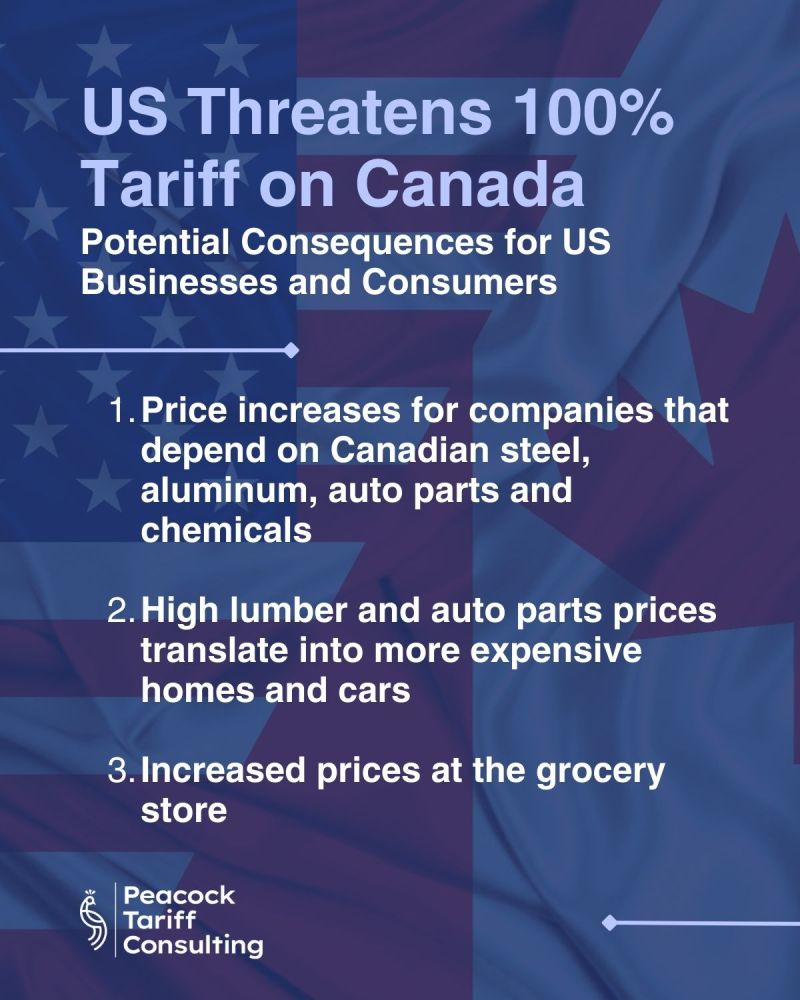
Executive Overview: A Tariff of Historic Magnitude
A proposed 100% tariff on Canadian goods represents far more than a negotiating tactic or abstract political gesture. This blanket duty would constitute one of the most significant trade interventions in modern North American history, with cascading consequences across supply chains, manufacturing operations, and consumer wallets. The automotive sector alone faces existential pressures as Canadian inputs represent critical components in the production of vehicles sold throughout North America.
Understanding the real-world implications requires moving beyond political rhetoric to examine the intricate dependencies between US manufacturers and Canadian suppliers. Canadian natural resources, processed materials, and fabricated components form the backbone of dozens of essential industries. A 100% tariff would not merely increase costs incrementally; it would fundamentally disrupt operational economics and force rapid restructuring of integrated manufacturing networks.
- Represents unprecedented tariff level in modern US-Canada trade relations
- Affects over 400 product categories across multiple industrial sectors
- Threatens approximately 2.8 million US jobs in integrated supply chains
- Estimated to increase consumer prices across automotive, lumber, and food categories
Critical Dependencies: The Steel and Aluminum Challenge
Canada supplies approximately 24% of US steel imports and 38% of aluminum imports. These raw materials feed directly into automotive manufacturing, construction, aerospace, and appliance production. A 100% tariff would increase input costs by hundreds of millions of dollars annually for US manufacturers who have engineered their production systems around Canadian supply reliability and cost competitiveness.
The aluminum sector presents particular vulnerability. Canadian hydroelectric power provides significant competitive advantage in smelting operations. With a doubled effective cost through tariffs, US manufacturers would face impossible choices: absorb the costs and lose margin, pass increases to consumers and lose market share, or relocate production to non-tariffed jurisdictions. Each option carries distinct economic pain.
Steel dependency is equally critical. Canadian specialty steel grades used in automotive safety components, turbine manufacturing, and structural applications would become substantially more expensive. Domestic alternatives often require retooling, qualification, and certification processes extending 12-18 months, creating a transition period of acute supply vulnerability.
- 24% of US steel imports sourced from Canada
- 38% of US aluminum imports depend on Canadian suppliers
- Tariff doubles effective input costs for integrated manufacturers
- No viable rapid substitutes for specialty steel and aluminum grades
- Qualification of alternative suppliers requires 12-18 months minimum
Automotive Sector: The Most Exposed Industry
The automotive industry faces the most immediate and severe consequences. Modern vehicles contain hundreds of Canadian-sourced components including chassis parts, engine blocks, transmission cases, and electrical systems. More than half of US automotive imports originate in Canada, and the value chain is so deeply integrated that removing a 100% tariff on Canadian inputs essentially means reimposing tariffs on domestic production.
A 100% tariff would increase the cost of a typical mid-range vehicle by $2,000 to $4,000 depending on component sourcing. This price increase would occur in a market already facing affordability challenges, likely reducing vehicle sales by 12-18% according to industry analysts. Domestic manufacturers would lose market share to international competitors not subject to the tariff regime.
The aerospace and related automotive component sectors face similar pressures. Light-weighting initiatives that reduced fuel consumption and emissions depend heavily on Canadian aluminum and titanium suppliers. Tariffs would force engineering redesigns that might take years to complete and test.
- Over 50% of US automotive imports source from Canada
- Individual vehicle cost increases estimated at $2,000-$4,000
- Vehicle sales likely to decline 12-18% in response
- Domestic manufacturers lose international cost competitiveness
- Aerospace component supply chains require Canadian specialty materials
Agricultural and Food Supply Impacts
Canada represents the primary source for numerous agricultural inputs and processed food products. Fertilizer components, grain mill products, beef, and processed foods would all experience significant price increases under a 100% tariff regime. These increases would cascade through food supply chains to consumers in the form of higher grocery prices.
Farmers dependent on Canadian fertilizer inputs would face difficult cultivation decisions. Postponing planting or reducing acreage becomes economically rational when input costs double. This supply reduction at the primary production level would compound downstream price pressures throughout the food system.
Cross-border agricultural logistics also face disruption. The integrated North American food system relies on daily cross-border shipments of perishable goods. Tariff administration and documentation requirements would add days to transit times, reducing the window during which perishable products remain viable for sale.
- Canadian agricultural inputs represent critical component of North American food security
- Fertilizer cost increases reduce farmer planting incentives
- Meat and processed food prices increase 15-25% on average
- Grocery inflation impacts middle and lower-income households disproportionately
- Perishable goods logistics become economically marginal
Consumer Price Consequences and Market Disruption
The consumer impact extends far beyond specific product categories. Lumber prices would increase substantially, affecting housing affordability at a time when many markets already struggle with homeownership accessibility. Used vehicle prices would rise as new vehicle sales decline and inventory tightens. Food prices across produce, meat, and processed categories would experience double-digit percentage increases.
Consumer spending patterns would shift in response to sustained price increases. Discretionary purchases would contract, reducing revenue for retailers and manufacturers serving non-essential categories. Employment in retail and service sectors connected to consumer discretionary spending would face pressure.
The timing compounds difficulties. A 100% tariff implemented during a period of recovering but fragile consumer confidence could trigger demand destruction that extends well beyond the immediate tariff-affected categories, potentially tipping economic growth into contraction.
- Lumber prices increase 20-35% affecting housing affordability
- Grocery inflation reaches 10-15% across major categories
- Vehicle prices increase 8-12% depending on Canadian component content
- Discretionary consumer spending declines 8-12%
- Retail employment and small business revenue face sustained pressure
Economic Uncertainty and Business Response
Beyond immediate price effects, a 100% tariff creates operational uncertainty that depresses business investment and hiring. Manufacturers cannot determine supply chain costs with confidence. Capital budgeting becomes speculative. Managers delay hiring and equipment purchases until tariff clarity emerges. This uncertainty itself becomes a drag on economic growth.
Companies begin evaluating relocation of production facilities outside both tariff zones. Some capacity shift to Mexico under USMCA, others to Asian jurisdictions. This capacity migration represents permanent loss of manufacturing employment in the US and Canada, with no guarantee of return even if tariffs are eventually removed.
Financial institutions tighten credit terms for businesses with high Canadian supply exposure. Insurance and bonding costs increase. These financing pressures particularly affect small and mid-sized manufacturers who lack direct access to capital markets and operate on margins insufficient to absorb tariff-driven cost increases.
- Business investment declines 5-8% as uncertainty increases
- Manufacturing relocation to non-tariffed jurisdictions accelerates
- Credit availability tightens for tariff-exposed sectors
- Supply chain restructuring requires massive upfront capital investment
- Management attention diverts from innovation to tariff mitigation
Policy Considerations and Long-Term Implications
A 100% tariff on Canadian goods is not merely an economic policy; it represents a fundamental reorientation of North American trade relationships. The policy assumes that tariff revenue and domestic production increases offset the economic damage from supply chain disruption, reduced competitiveness, and consumer price increases. The historical evidence does not support this assumption.
Retaliatory tariffs from Canada on US goods would follow rapidly, affecting agricultural exports, chemicals, machinery, and processed foods. The trade war would expand beyond bilateral US-Canada relations to involve other trading partners responding to shifts in global trade patterns.
Ultimately, the proposal demands serious consideration of whether the political objectives justify the economic costs: higher consumer prices, disrupted manufacturing, reduced competitiveness, and foregone economic growth. These real consequences extend far beyond abstract policy discussions into the lives of workers, families, and communities dependent on integrated North American trade.
- Historical tariff policies generated retaliatory responses and reduced growth
- Canadian counternariffs would affect US agricultural and manufacturing exports
- Global supply chains would reorganize, reducing US competitiveness
- Policy success depends on offsetting tariff-generated cost increases and disruption
- Implementation requires sustained political commitment despite economic headwinds