
A Reset Two Years in the Making
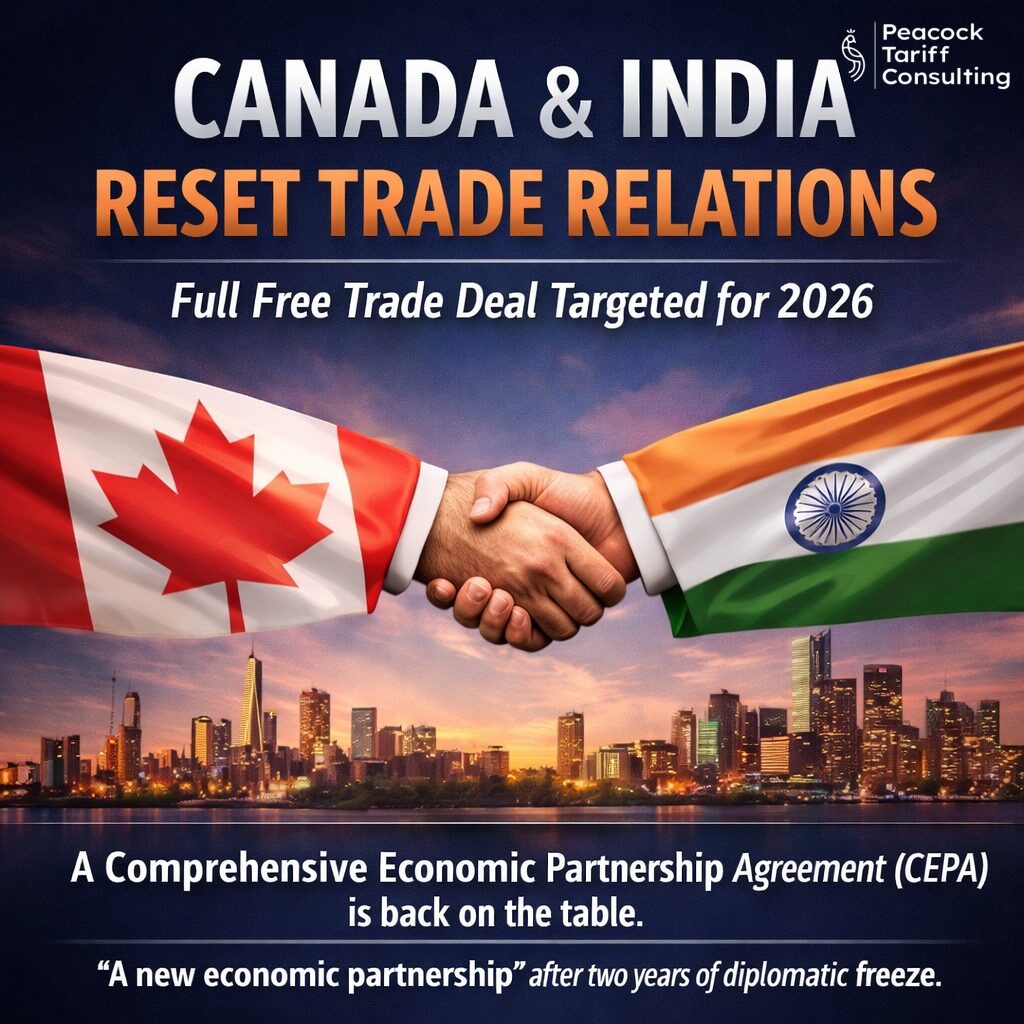
Canada and India have formally relaunched trade negotiations after a two‑year diplomatic freeze, marking one of the most significant resets in Canada’s international economic strategy. Prime Minister Mark Carney and Indian Prime Minister Narendra Modi jointly announced the revival of negotiations for a Comprehensive Economic Partnership Agreement (CEPA) a full free trade agreement with a target completion date of end‑2026.
This reset follows a period of severe strain. In 2023, relations deteriorated after Canada alleged Indian involvement in the killing of a Sikh activist in British Columbia allegations New Delhi rejected. Both countries expelled diplomats, suspended visa services, and froze trade talks.
Today, both governments describe the moment as a “new chapter” and a “valued partnership with new ambition, focus, and foresight.”
For Canadian SMEs, this is not just a diplomatic thaw it is a structural reopening of one of the world’s fastest‑growing major markets.
What Was Announced: The New Canada–India Trade Framework
Formal Relaunch of CEPA Negotiations
India and Canada have officially begun negotiations for a Comprehensive Economic Partnership Agreement, with Terms of Reference signed in New Delhi by Trade Ministers Piyush Goyal and Maninder Sidhu.
Both sides agreed to:
- conclude CEPA by end‑2026
- expand trade in goods, services, and investment
- restore diplomatic staffing to pre‑2023 levels
- revive institutional platforms like the India–Canada CEO Forum
This is the first major bilateral visit by a Canadian Prime Minister to India in eight years.
Trade Targets
The two governments set ambitious goals:
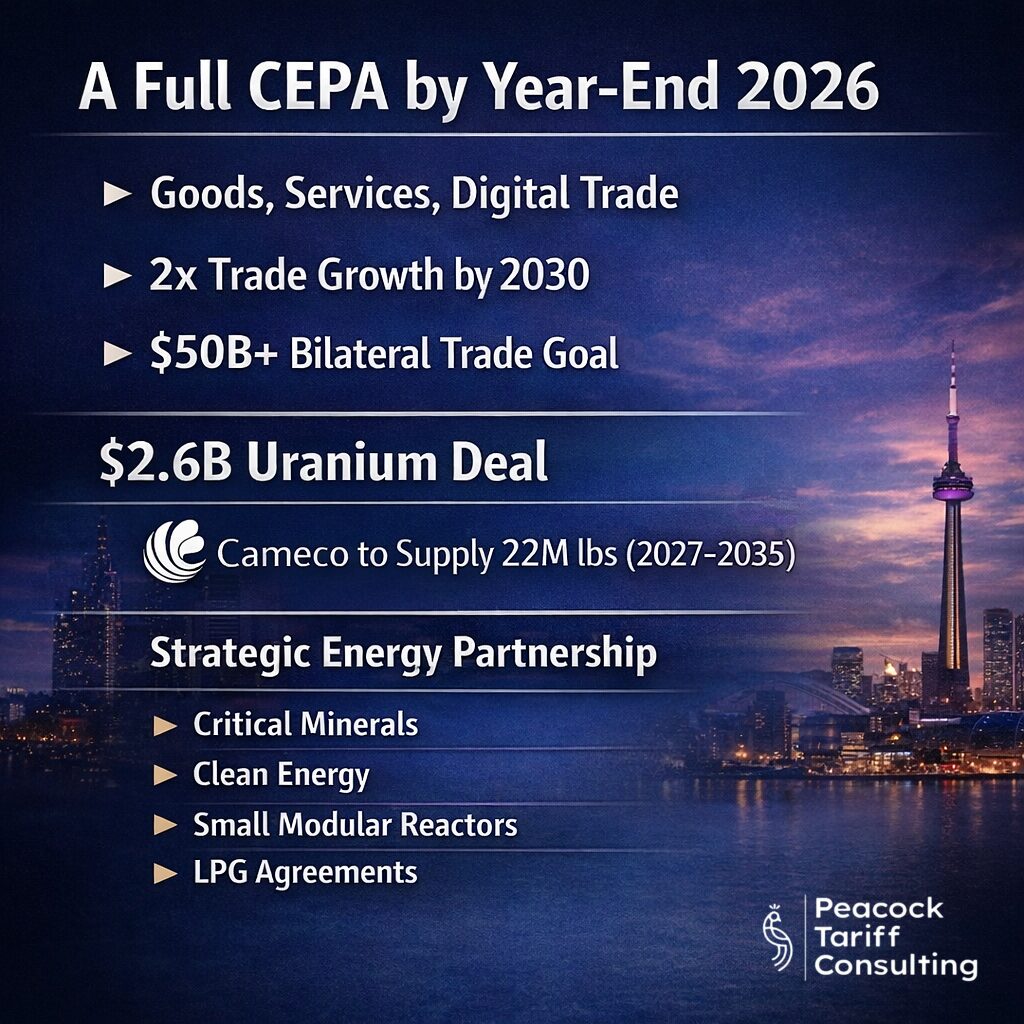
- India: increase bilateral trade to $50 billion by 2030
- Canada: double non‑U.S. exports and raise India trade to $70 billion by 2030
These targets reflect a shared recognition that the relationship has been underdeveloped for decades.
Strategic Energy and Nuclear Agreements
India and Canada signed a nuclear agreement under which Canada will supply uranium to India part of a broader energy partnership spanning:
- critical minerals
- small modular reactors
- advanced nuclear technology
- clean energy cooperation
- long‑term LPG supply negotiations
This aligns with India’s push to expand nuclear capacity and Canada’s goal to diversify energy exports.
Diplomatic Normalization
Both countries restored High Commissioners Dinesh K. Patnaik for India and Christopher Cooter for Canada and are rebuilding diplomatic staff to pre‑2023 levels.
This normalization is essential for predictable trade flows, visa processing, and business mobility.
Why This Reset Matters for Canadian SMEs
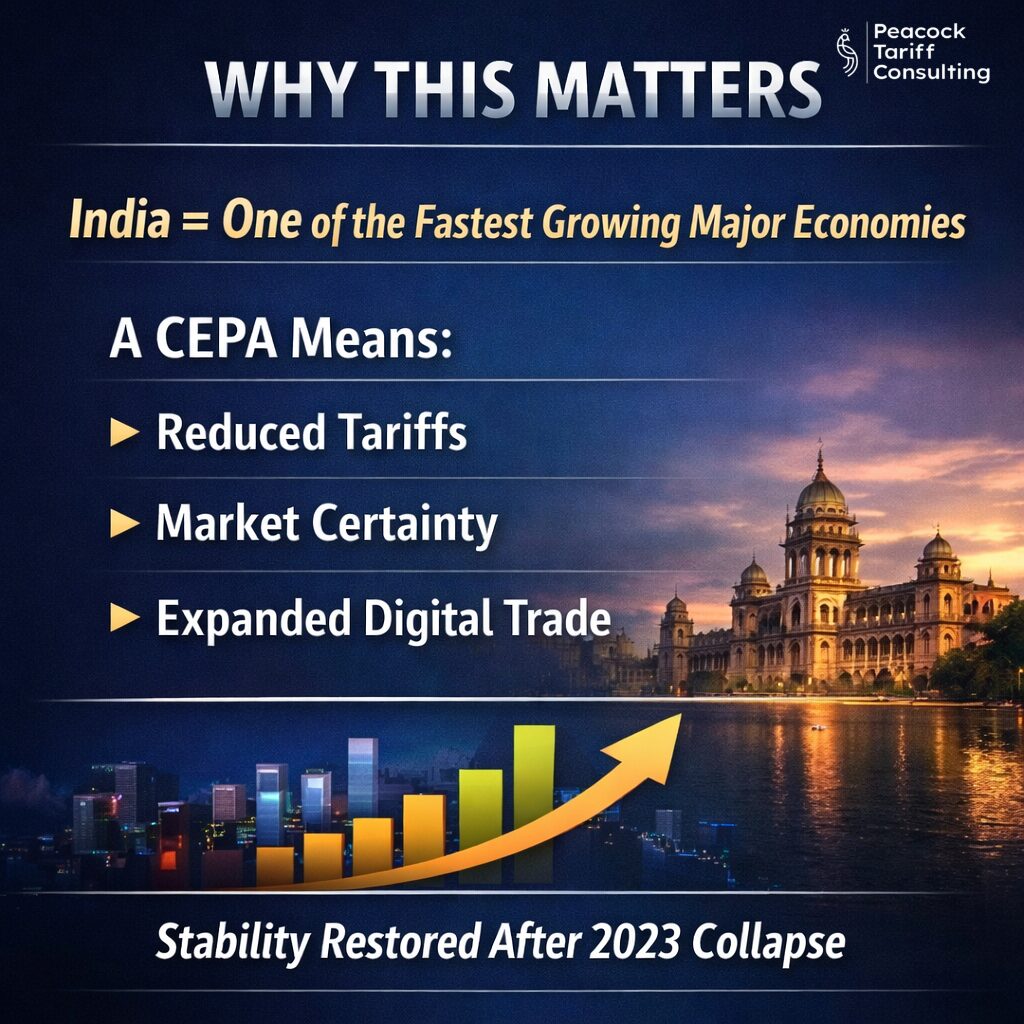
India Is One of the World’s Fastest‑Growing Major Economies
India’s GDP growth consistently outpaces global averages. For Canadian SMEs, this means:
- rising consumer demand
- expanding middle‑class purchasing power
- increased demand for agri‑food, clean tech, digital services, and advanced manufacturing
CEPA Would Reduce Tariffs Across Key SME Sectors
A CEPA agreement would likely reduce tariffs on:
- agri‑food
- forestry products
- machinery and equipment
- clean technology
- digital services
- professional services
- education and training
India’s tariff regime is currently one of the world’s highest meaning even modest reductions create significant competitive advantages.
Predictable Market Access After Years of Instability
The 2023 diplomatic crisis created:
- visa delays
- suspended trade talks
- uncertainty for exporters
- reduced investor confidence
The new CEPA roadmap restores predictability essential for SMEs that lack the buffers of large corporations.
A Strategic Diversification Away From the U.S.
Carney emphasized that Canada is “taking on the world as it is” and must diversify beyond the U.S. market.
India is central to this diversification strategy.
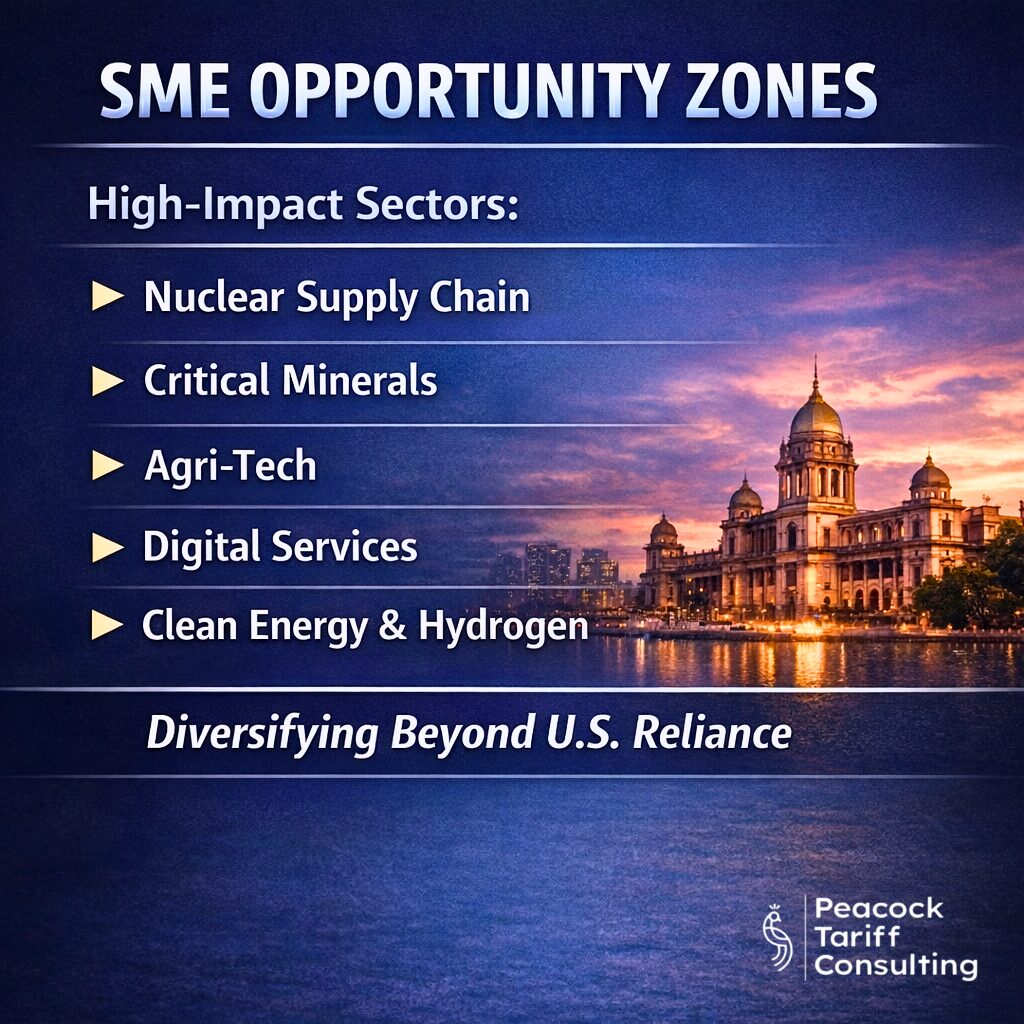
Sector‑Specific Opportunity Maps for Canadian SMEs
Agriculture and Agri‑Food
India is a major importer of:
- pulses
- lentils
- canola oil
- specialty crops
- processed foods
SMEs can benefit from:
- reduced tariffs under CEPA
- expanded access to Indian food processors
- opportunities in climate‑resilient agriculture and agri‑tech
Energy and Nuclear Supply Chains
The uranium supply agreement and nuclear cooperation create opportunities for SMEs in:
- nuclear components
- engineering services
- safety systems
- critical minerals
- clean energy technology
Digital Services and Technology
India’s tech sector is massive but it also imports:
- cybersecurity services
- AI solutions
- cloud infrastructure
- fintech tools
- digital education platforms
Canadian SMEs in tech can partner with Indian firms or enter the market directly.
Clean Technology and Climate Solutions
India’s climate goals require:
- renewable energy systems
- hydrogen technology
- emissions‑reduction tools
- water management solutions
- waste‑to‑energy systems
Canadian SMEs are globally competitive in these areas.
Education, Skills, and Training
India’s workforce development needs create demand for:
- vocational training
- online education
- certification programs
- professional services
Operational Impacts for SMEs
Market Re‑Entry After a Diplomatic Freeze
SMEs that paused operations in India can now:
- reconnect with distributors
- re‑establish supply chains
- renegotiate contracts
- resume market development
Tariff Modelling and Pricing Strategy
SMEs should prepare for:
- tariff reductions under CEPA
- new rules of origin
- updated documentation requirements
- competitive pricing opportunities
Logistics and Market Access
As relations normalize:
- visa processing will improve
- business travel will resume
- customs processes will stabilize
- trade missions will restart
Risk Scenarios Through 2026
Political Volatility
The 2023 crisis shows that political shocks can disrupt trade. SMEs should diversify within India and across Asia.
Negotiation Delays
CEPA has been attempted since 2010. While momentum is strong, delays are possible.
Regulatory Complexity
India’s regulatory environment can be challenging. SMEs must prepare for:
- licensing requirements
- compliance reviews
- local partnership rules
How Peacock Tariff Consulting Supports SMEs
This section mirrors the structure used in the China deep dive.
Tariff and CEPA Readiness
Peacock Tariff Consulting helps SMEs:
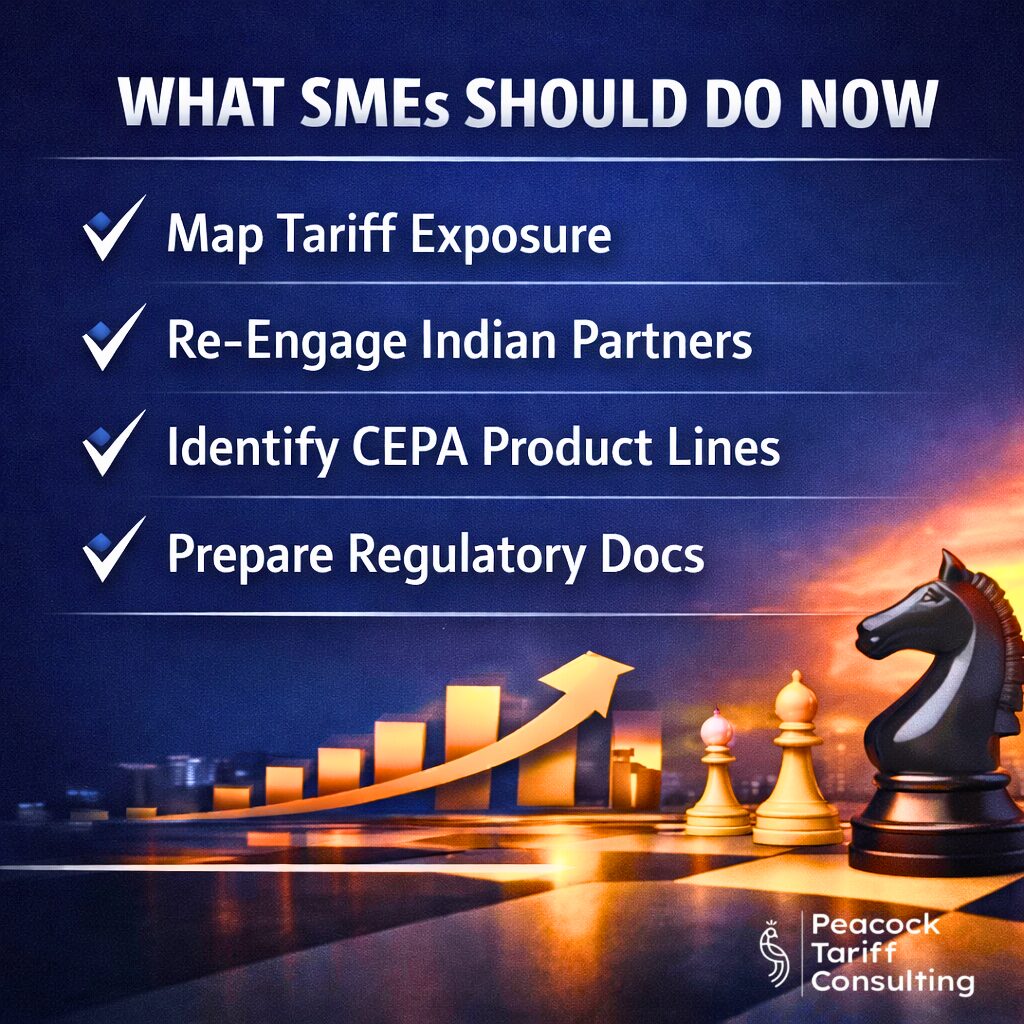
- map tariff exposure
- model CEPA tariff reductions
- prepare documentation
- ensure compliance
India Market Re‑Entry Playbooks
We build:
- distributor engagement scripts
- pricing templates
- regulatory checklists
- logistics and routing strategies
Risk and Scenario Planning
We help SMEs:
- prepare for negotiation delays
- diversify market exposure
- build contingency plans
Sector‑Specific Opportunity Mapping
We provide tailored strategies for:
- agri‑food
- clean tech
- digital services
- energy and nuclear supply chains
SME Action Roadmap for 2026
Immediate Actions
- Reconnect with Indian partners
- Update pricing models
- Review regulatory requirements
- Conduct tariff exposure analysis
Next 90 Days
- Negotiate new contracts
- Secure logistics partners
- Explore CEPA‑aligned opportunities
Through 2026
- Lock in long‑term agreements
- Expand into high‑growth sectors
- Build India‑specific product lines
Final Strategic Outlook
Canada and India’s trade reset is more than a diplomatic thaw it is a structural reopening of a high‑growth market with enormous potential for Canadian SMEs. With CEPA targeted for completion by end‑2026, SMEs have a two‑year window to position themselves ahead of competitors.
India’s economy is expanding rapidly. Canada is diversifying aggressively. The alignment is real and the opportunity is immediate.