
Japan’s Strategic Tariff Exemption Request
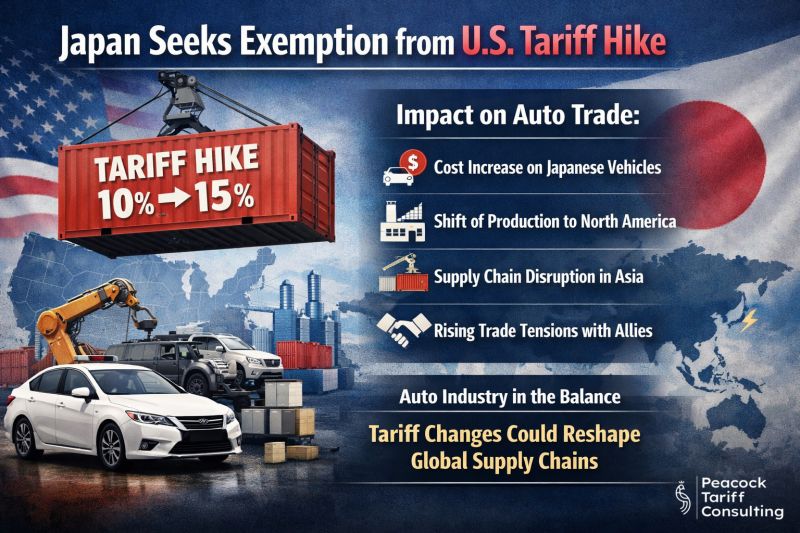
Japanese trade officials are actively pressing the United States for exemption from recently announced tariff increases, specifically seeking to prevent a 10% to 15% tariff escalation on Japanese exports. This diplomatic effort reflects the significant exposure Japan faces from tariff policies and the material impact such increases would have on bilateral trade relationships. The Japanese government’s public position emphasizes that increased tariffs undermine longstanding trade commitments and cooperative frameworks established over decades.
The timing and intensity of Japan’s exemption request underscore the seriousness with which Japanese policymakers view the tariff situation. Unlike previous trade disputes that involved negotiation periods and gradual implementation, the current tariff environment moves rapidly. Japan recognizes that accepting higher tariffs could establish a precedent, making future reductions more difficult to negotiate. The exemption request strategy reflects Japan’s preference for maintaining the existing tariff framework rather than engaging in escalatory trade dynamics.
- Japanese officials seeking exemption from 10-15% tariff increase
- Diplomatic emphasis on protecting existing trade commitments
- Rapid implementation timeline creating urgency for Japanese response
- Precedent concerns motivating aggressive exemption strategy
Automotive Trade as the Central Strategic Concern
Japan’s primary concern regarding tariff increases centers on automotive trade, where Japan represents one of the largest sources of vehicle and parts exports to the United States. Japanese automotive manufacturers and suppliers have built integrated supply chains with the US market, with production facilities, distribution networks, and dealer networks established over decades. A 10-15% tariff increase would create material cost increases affecting the competitiveness of Japanese vehicles in the US market.
The Japanese automotive sector is exceptionally vulnerable to tariff increases. Major manufacturers including Toyota, Honda, Nissan, Mazda, and Subaru all export significant volumes to the US market. These manufacturers compete in price-sensitive segments where tariff-driven cost increases of 2,000-4,000 dollars per vehicle could impact market share. Additionally, Japanese suppliers provide components and subassemblies to both Japanese and American manufacturers operating in the US, creating interconnected exposure across the industry.
- Japan exports 1.5+ million vehicles annually to United States
- Japanese suppliers provide components to domestic US manufacturers
- Tariffs would increase vehicle prices 2-4% across Japanese brands
- Competitive positioning in mass-market segments most vulnerable
Ripple Effects Across Manufacturers and Supply Chains
A 10-15% tariff increase on Japanese automotive exports would create ripple effects throughout the entire manufacturing ecosystem. Even modest tariff increases in automotive trade create multiplicative effects across supply networks. Suppliers providing components to Japanese manufacturers would face higher input costs. Domestically based manufacturers purchasing from Japanese suppliers would face cost increases that affect their overall competitiveness. The integrated nature of North American automotive supply chains means that tariff increases on Japanese imports ultimately affect American manufacturers and consumers as well.
The supply chain integration between Japanese manufacturers and US-based operations creates complexity in tariff impact assessment. Japanese manufacturers operate US production facilities that export components back to Japan and serve the North American market. Tariffs on Japanese-origin components entering the US market could increase costs for American manufacturers. Similarly, tariff increases on imported Japanese vehicles would reduce sales volume for Japanese manufacturers, ultimately affecting employment at US-based facilities and supplier networks.
- Japanese suppliers integrated into domestic manufacturing networks
- US-based Japanese manufacturer facilities affected by tariff policies
- Component costs increasing across all assemblers
- Employment effects distributed across multiple sectors
Competitive Positioning and Market Dynamics
Japanese automotive manufacturers have invested heavily in competitive positioning within the US market. Toyota, Honda, and Nissan operate high-volume production facilities generating significant employment. Their competitive advantage rests partly on manufacturing efficiency and partly on brand perception. Tariff-driven price increases could undermine the value proposition that Japanese manufacturers have developed, particularly in the mass-market segments where Japanese brands compete most effectively.
The US automotive market is intensely competitive, with Japanese manufacturers competing against American, European, and increasingly Chinese manufacturers. Tariff increases that apply selectively to Japanese imports create relative disadvantage versus other competitors. If American or European manufacturers face lower or no tariffs, Japanese manufacturers absorb disproportionate tariff costs, affecting their competitiveness. This relative disadvantage becomes particularly acute in price-sensitive market segments where 2-3% price increases significantly impact purchasing decisions.
- Japanese brands hold 30%+ market share in US automotive
- Mass-market segments (compact sedans, SUVs) most price-sensitive
- Competitive disadvantage versus non-tariff-affected manufacturers
- Brand switching likely if price premiums exceed historical levels
Bilateral Trade Relationship Implications
Japan is a critical ally in American foreign policy, and the bilateral trade relationship reflects both economic interdependence and strategic partnership. The Japanese government’s public stance emphasizes that tariff increases violate principles of fair trade and established partnership frameworks. This framing attempts to elevate the tariff discussion beyond pure economics, situating it within a broader geopolitical context where trade policy affects alliance relationships.
The broader US-Japan relationship encompasses security cooperation, technology partnerships, and investment flows that extend well beyond automotive trade. Japanese policymakers are aware that aggressive tariff policies toward Japan could generate broader friction in the bilateral relationship. The Japanese government has leverage through potential responses affecting American businesses operating in Japan and through decisions regarding technology partnerships, investment commitments, and defense cooperation. However, Japan’s preference remains negotiated exemptions rather than retaliatory measures.
- Japan-US alliance relationship extends beyond trade
- Technology and defense partnerships interrelated with trade policy
- Japanese potential responses affecting American technology companies
- Negotiated resolution preferred to retaliatory escalation
Negotiation Strategy and Exemption Probability
Japanese negotiators are pursuing a strategy emphasizing historical trade relationships, mutual economic benefits, and alliance partnership. The exemption request highlights Japan’s role as a stable, reliable trading partner and emphasizes the mutual benefits of existing tariff structures. Japanese officials are leveraging diplomatic channels and industry relationships to communicate both the Japanese government’s position and the practical business impacts of tariff increases. The strategy involves multiple stakeholder engagement including government-to-government negotiations, industry association participation, and direct manufacturer communication.
- Multi-channel negotiation strategy targeting government and industry
- Emphasis on historical partnership and mutual benefits
- Industry stakeholder involvement in communicating business impacts
- Timeline pressure creating urgency in exemption negotiations