
Tag: Agriculture
-
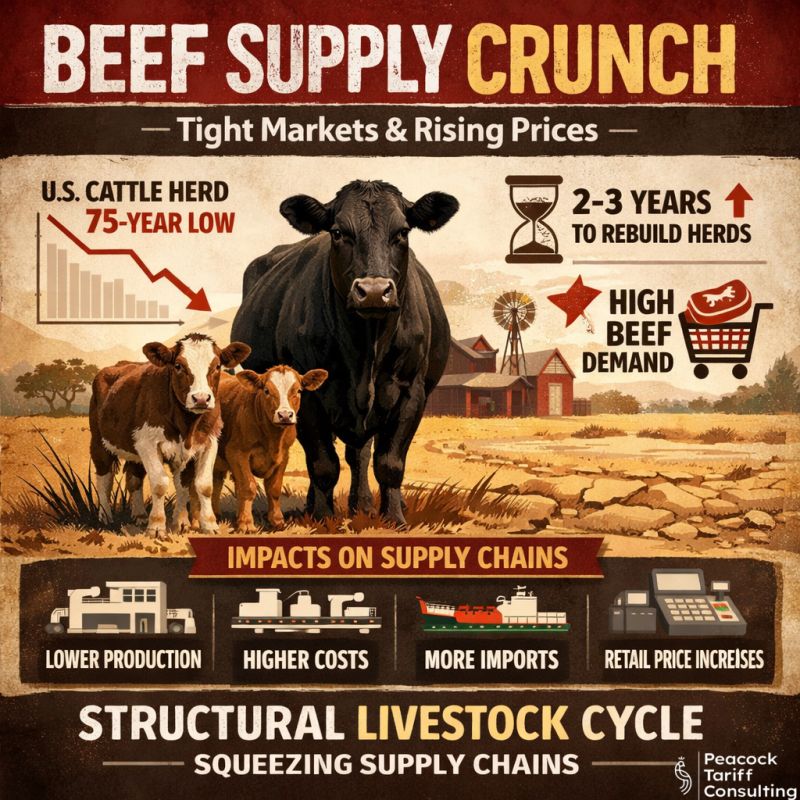
The Severity of the Crisis: A 75-Year Low The U.S. cattle herd has reached its lowest level since 1951-a startling statistic that signals far more than a temporary market fluctuation. This decline represents a fundamental disruption in one of America’s most essential agricultural supply chains. Retail beef prices have already surged approximately 17 percent year-over-year…
-

A Structural Reset in Beef Tariff Policy The United States has finalized a comprehensive trade agreement with Argentina that represents a structural reset in how U.S. tariff policy manages beef supply and pricing. The agreement scraps hundreds of tariffs historically applied to Argentine beef products while simultaneously expanding Argentina’s preferential quota for beef exports to…
-
The Agricultural Tariff Relief Package: Scale and Composition China’s suspension of major tariffs on Canadian agricultural products represents a significant recalibration of bilateral trade relations. The suspension of 100% tariffs on canola meal and peas, combined with the halt of 25% tariffs on lobster and crab through the end of 2026, signals movement toward normalized…
-
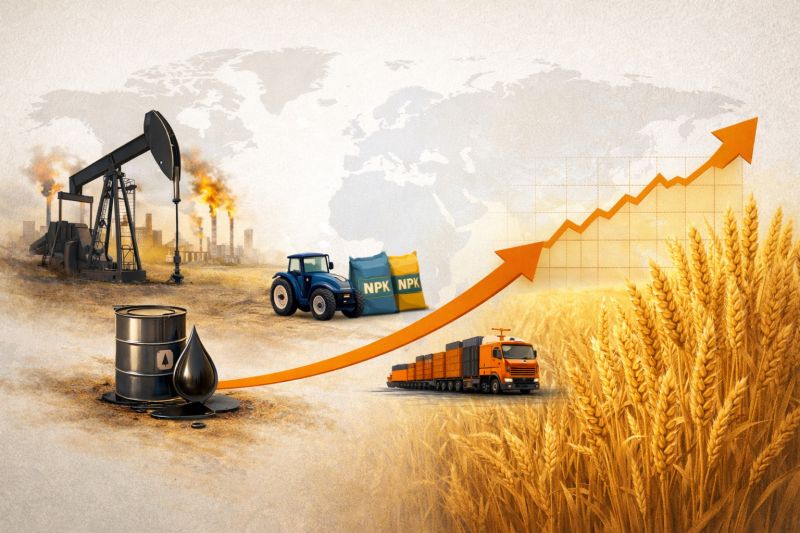
Energy Crisis Drives Agricultural Cost Inflation Global wheat markets are experiencing significant upward pressure as energy disruptions in the Middle East cascade through agricultural supply chains. Wheat prices have approached two-year highs, driven by a complex interplay of energy costs that fundamentally reshape farming economics. The connection between energy markets and grain pricing is direct…