
Tag: Duty Refund
-
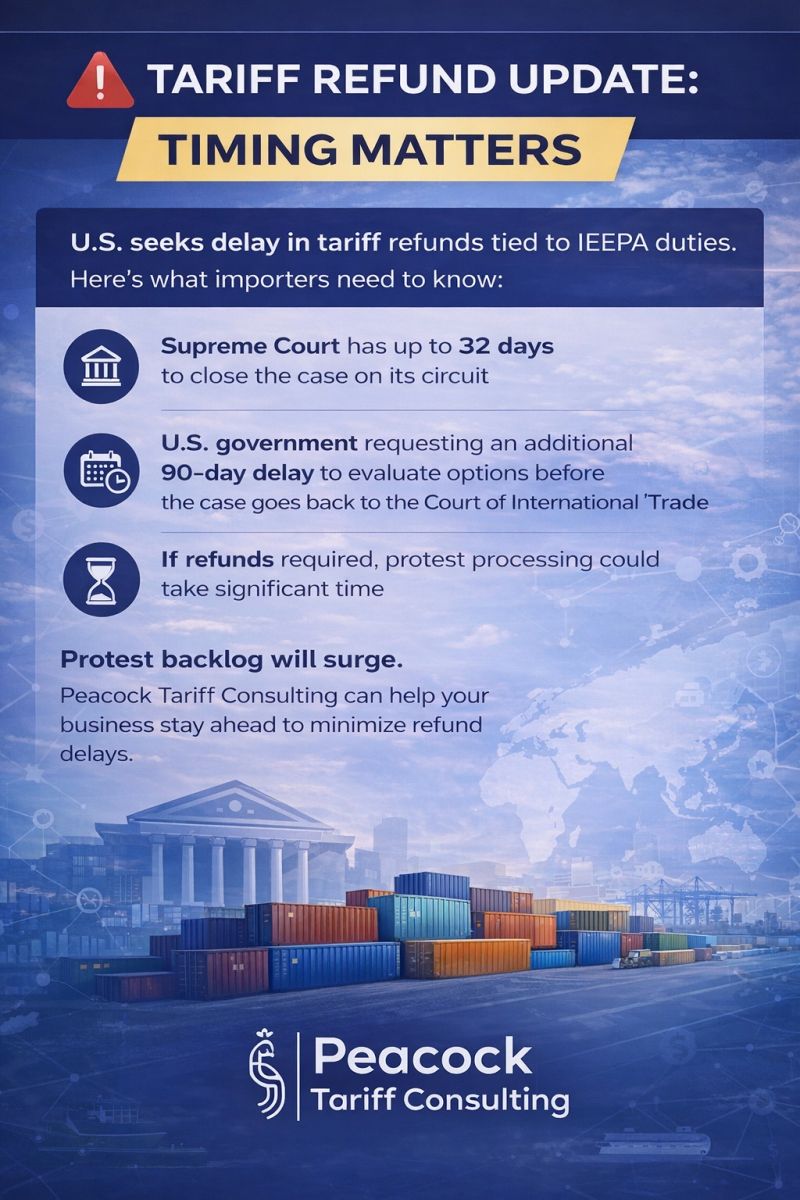
The Timeline Paradox: When Delays Serve Strategic Purposes The United States administration’s request for a 90-day delay in IEEPA refund litigation represents a calculated strategy to postpone the administrative burden of processing refund claims. The Supreme Court retains the theoretical authority to conclude the case within 32 days from the current moment, but the government…
-

IEEPA Tariffs: The Foundation and What Importers Paid The International Emergency Economic Powers Act (IEEPA) grants the President authority to impose tariffs and trade restrictions during periods of national emergency. In recent years, IEEPA has been invoked multiple times to implement tariffs on goods from various countries, affecting billions of dollars in imports and impacting…
-
The IEEPA Refund Opportunity and Customs Processing Reality The International Emergency Economic Powers Act (IEEPA) has been employed multiple times by recent administrations to impose emergency tariffs on imported goods. Companies that paid duties on goods covered by IEEPA tariffs may be eligible for refunds as policy changes, legal challenges, or new administrations modify these…
-
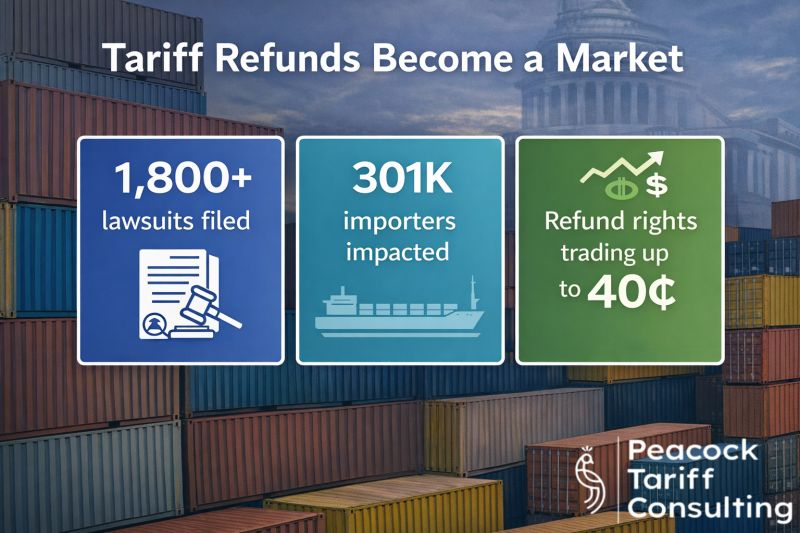
Introduction: A Paradigm Shift in Trade Litigation The landscape of US trade policy litigation has undergone a dramatic transformation. What began as isolated challenges to tariff authority has evolved into a massive coordinated legal campaign involving over 1,800 companies seeking to recover billions in duties paid under now-invalid tariffs. This unprecedented wave of litigation represents…
-
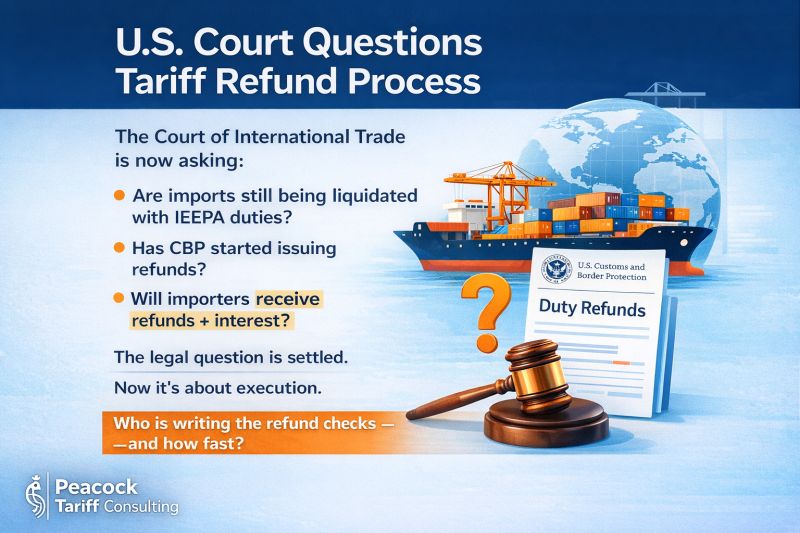
The Supreme Court Settled One Question; The CIT Must Answer Others The Supreme Court’s decision on tariff refunds established a foundational principle: importers are owed refunds for duties collected under the International Emergency Economic Powers Act (IEEPA). However, settling the legal principle of refund eligibility does not resolve the practical complexities of execution. The Court…
-

The Modernization Milestone The U.S. Customs and Border Protection agency has completed a significant technological overhaul of its duty-refund infrastructure. As of February 6, 2026, the agency transitioned entirely to electronic refunds, marking the end of an era dominated by paper checks. This modernization represents one of the most substantial shifts in CBP operations in…
-

Effective February 6, 2026 Federal Register 91 FR 21 (Jan. 2, 2026) U.S. Customs and Border Protection (CBP) has issued an interim final rule that fundamentally reshapes how importers receive refunds. Beginning February 6, 2026, CBP will issue all refunds electronically, with only narrow hardship exceptions. This rule amends 19 CFR Parts 24, 141, 159,…
-

Tariff refund checks are becoming a new entry point for scammers, and in late 2025 almost any “tariff refund” check that shows up in the mail should be treated as suspicious until proven otherwise. Executive-branch and CBP payment changes mean legitimate duty refunds increasingly move electronically, not by paper check, which makes mailed refund checks…
-

Wall Street’s Tariff Refund Trade: A Billion-Dollar Bet on Judicial Reversal and Presidential Power In an unprecedented fusion of trade law, financial speculation, and constitutional brinkmanship, Wall Street firms are now buying up the rights to tariff refunds from U.S. importers wagers that hinge on the Supreme Court striking down President Trump’s emergency tariffs. This…