
Tag: Mexico
-
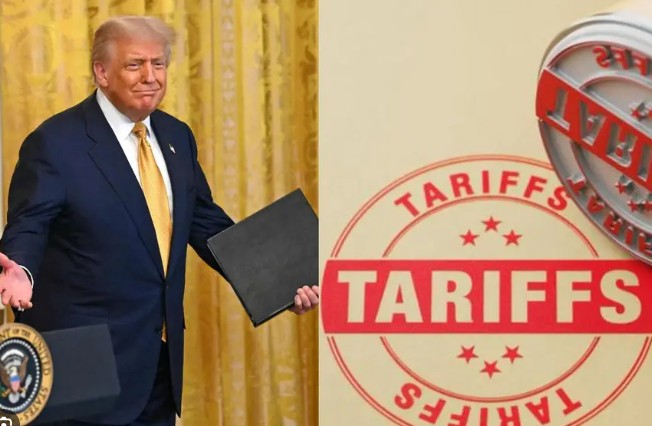
If countries like India, Canada, Mexico, Brazil, South Korea, and Taiwan don’t finalize trade agreements with the U.S. by August 1, they’ll face steep tariffs ranging from 25% to 50%. These tariffs will apply to a wide range of goods, including: The U.S. will also begin collecting these tariffs immediately, with no further grace period.…
-
Why the U.S. Imposed 30% Tariffs on Mexico Trump’s August 1 tariff rollout is driven by a mix of national security, economic leverage, and political theater: Impact on the U.S. Economy The U.S. may feel the sting more than expected: Impact on Mexico’s Economy Mexico’s exposure is massive: over 80% of its exports go to…
-
Market Reaction and Immediate Price Effects The moment President Trump announced a 50% tariff on imported copper under a Section 232 “national security” probe, U.S. Comex copper futures spiked over 10%, signaling traders’ concerns about looming supply constraints and cost pressures for downstream industries. A two-tier pricing structure has already emerged: Market Current Price (per…
-
President Trump has instructed his administration to begin sending formal letters to over 100 trading partners starting July 4. Each letter will specify the tariff rate ranging from 10–20% up to 60–70% that the recipient country will face on all imports into the United States effective August 1. Rather than negotiate dozens of bilateral deals,…
-
In-Depth Analysis: Halting U.S.–Canada Trade Talks on July 27, 2025 When President Trump abruptly ceased negotiations to modernize USMCA on July 27, 2025, it wasn’t just a headline grab it risked unraveling a deeply integrated North American economy. Here’s a granular look at why this showdown matters, who pays, and how to navigate the fallout.…
-
North America’s seaports are the lifeblood of continental and global trade, moving over 30 million TEUs annually through dozens of gateway terminals that span three coastlines, the Gulf of Mexico and the St. Lawrence Seaway. From the ultra-deep berths of Los Angeles and New York–New Jersey to the riverine interfaces of New Orleans and Montreal,…
-
Overview and Context The 2025 G7 summit is being held amid profound global shifts: rapid digital transformation, an ongoing post‐pandemic recovery, and renewed geopolitical tensions that have upended traditional supply chains. Set against the breathtaking backdrop of the Canadian Rockies near Kananaskis, Alberta, the summit represents more than just high-level diplomacy. It is an arena…
-
Background and Policy Context On May 30, 2025, U.S. President Donald Trump announced a 50% increase in steel and aluminum tariffs, doubling the original 25% rate introduced during his first term in 2018. The new tariff hike is scheduled to take effect on June 4, 2025 and represents a significant escalation in Trump’s longstanding efforts…
-
Companies across various industries have been adapting to the shifting tariff landscape in 2025, implementing strategic measures to mitigate financial impacts and maintain supply chain stability. Key Tariff Changes and Business Responses Industry-Specific Adaptations Retail & Consumer Goods Technology & Gaming Manufacturing & Logistics Startups & Investment Food & Beverage Aviation & Travel Automotive Industry…
-
A three-judge panel from the U.S. Court of International Trade ruled that several of President Trump’s tariffs exceeded his authority under the International Emergency Economic Powers Act (IEEPA). The court found that the tariffs lacked identifiable limits and did not align with the threats outlined in Trump’s executive orders. As a result, the ruling blocks…