
Tag: Supply Chain
-

The United States moved to open a sweeping new front in its trade agenda this week, with the U.S. Trade Representative determining that 60 economies together accounting for the overwhelming majority of America’s imports have failed to ban and enforce prohibitions on goods made with forced labor, and proposing additional tariffs of up to 12.5%…
-

A window into how Washington is now buying American pharmaceutical capacity and what the Lebanon expansion tells us about the new U.S. industrial-policy architecture for pharma Eli Lilly is making another major investment in U.S. manufacturing, announcing plans to spend an additional $4.5 billion at two of its sites in Lebanon, Indiana. The headline figure…
-
Introduction: The Nearshoring Imperative Nearshoring, the practice of moving manufacturing and sourcing operations from distant overseas locations to closer countries, has emerged as one of the most significant supply chain trends of the decade. Driven by tariff pressures, supply chain disruption risk, rising logistics costs, and a desire for greater operational control, businesses across industries…
-
Introduction: Paying Duty on the Right Price When goods pass through multiple intermediaries before reaching the U.S. importer, each transaction adds a markup. Under the default customs valuation rules, duties are assessed on the final transaction value: the price the U.S. importer pays to the foreign seller. But if there is an earlier sale in…
-
The Reciprocal Tariff Era Reciprocal tariffs mirror the rates other countries impose on U.S. exports. In practice, they have created a complex, multi-layered environment that changes frequently and affects different products and countries differently. Current State of Reciprocal Tariffs Actions have been taken against a broad range of trading partners under several legal authorities. Some…
-
Tariffs as a Supply Chain Risk Factor When tariff rates can change by 25 percentage points in weeks, tariffs become a dynamic risk factor demanding the same attention as any other supply chain threat. Tariff risk is driven by identifiable political and economic forces that can be anticipated and managed. Identifying Your Tariff Risk Exposures…
-
A Bilateral Relationship Under Strain Retaliatory tariffs and surtaxes imposed by both governments have disrupted supply chains, increased costs, and created unprecedented planning uncertainty for businesses on both sides of the border. Understanding the Current Tariff Landscape U.S. actions include Section 232 tariffs on steel and aluminum, broader IEEPA tariffs, and reciprocal measures. Canada has…
-
Moving from Reaction to Anticipation A tariff impact assessment is a structured analytical exercise that quantifies your current tariff exposure, models the impact of potential changes, and identifies strategic options for mitigation. Think of it as a stress test for your supply chain’s tariff resilience. What a Tariff Impact Assessment Involves Current state analysis quantifies…
-
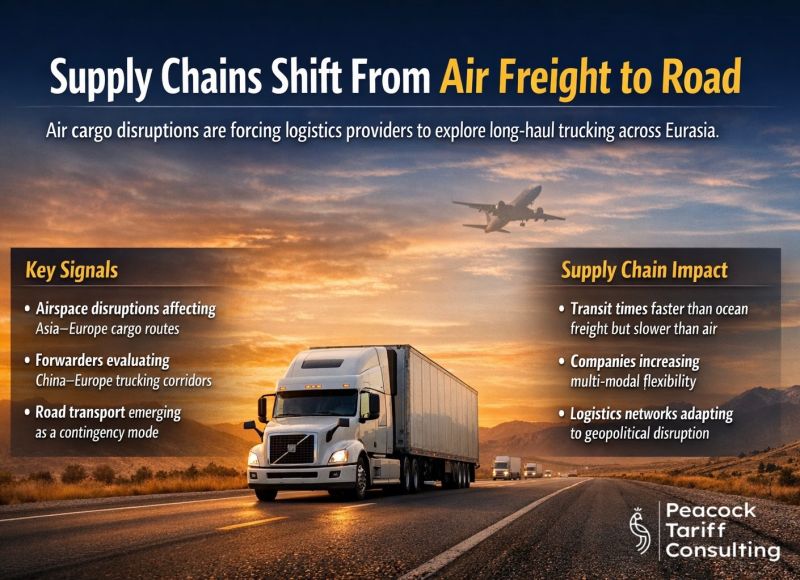
The Disruption of Air Freight Corridors: A Changing Logistics Reality For decades, air freight has represented the premium option for time-sensitive, high-value cargo requiring rapid movement across continents. A manufacturer needing to deliver critical components from Asian suppliers to European assembly facilities could rely on consistent, predictable air service with transit times of 3-5 days…
-
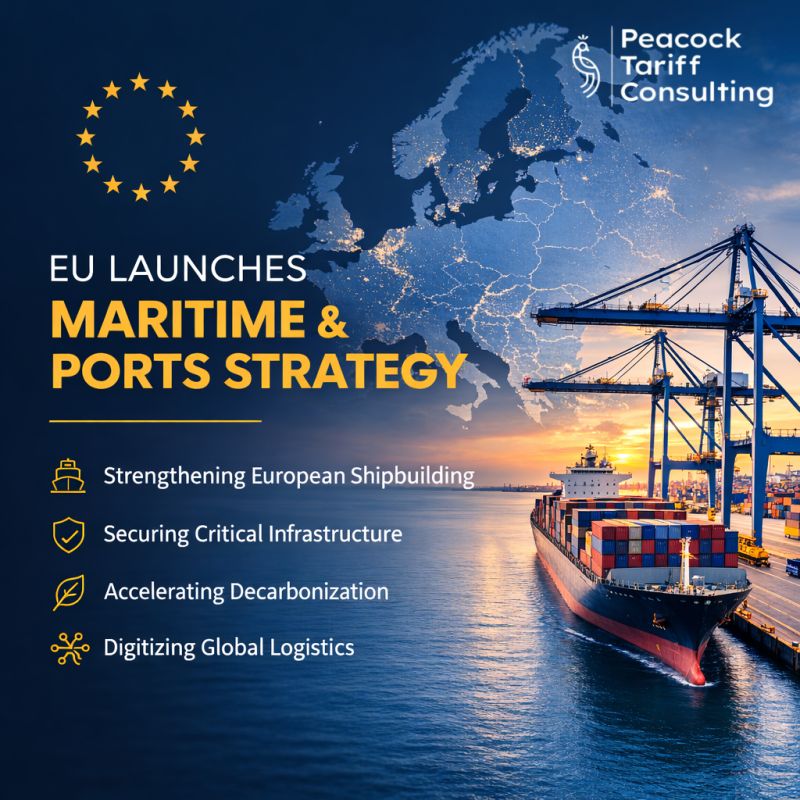
A Paradigm Shift: Ports as Strategic Infrastructure The European Union has unveiled a comprehensive Maritime Industrial Strategy and Ports Strategy that signals a fundamental shift in how governments view global shipping infrastructure. This is not merely a logistics initiative focused on operational efficiency. Rather, it represents a recognition that ports are among the most critical…