
Tag: United States
-
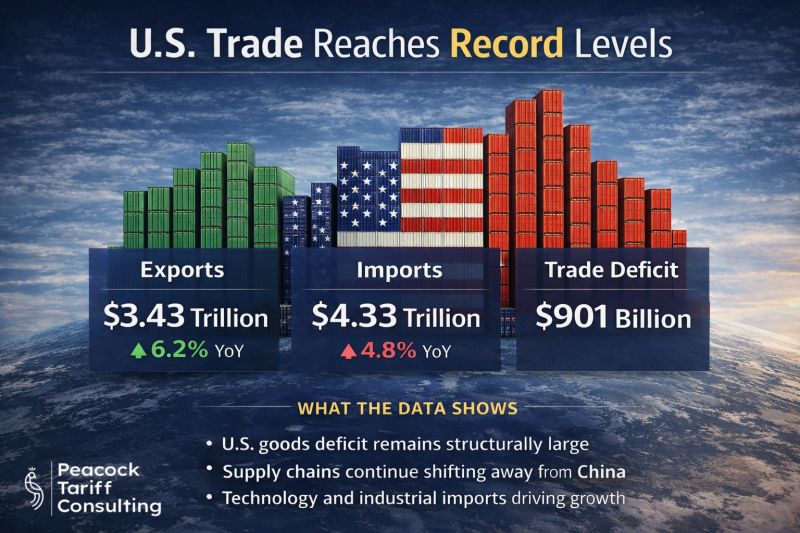
Record Trade Volumes Mask Persistent Deficit Dynamics US trade reached record levels in 2025, with exports rising to 3.43 trillion dollars, up 6% year-over-year, while imports climbed to 4.33 trillion dollars. Despite these record volumes, the structural trade deficit persists largely unchanged. The deficit remained near 901 billion dollars, reflecting a fundamental imbalance between what…
-
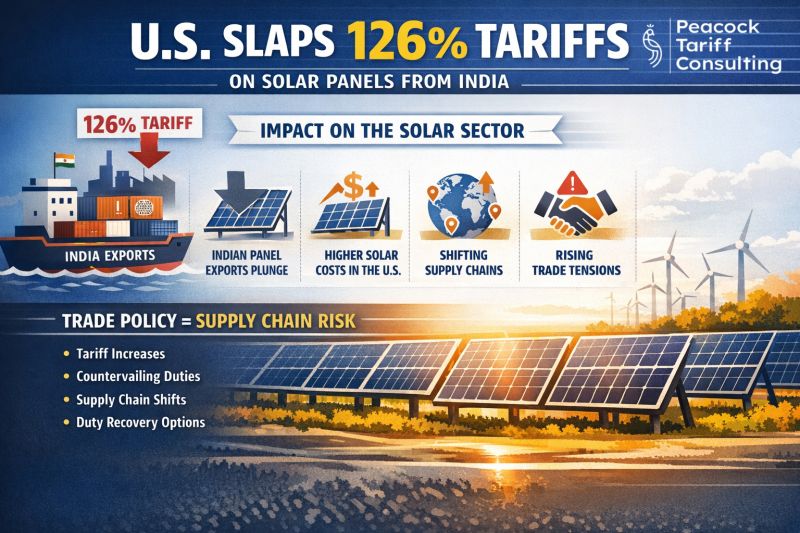
The Tariff Shock: 126% Preliminary Countervailing Duties on Indian Solar Modules The imposition of preliminary countervailing duties approaching 126 percent on solar cells and modules originating from India represents a seismic disruption to both Indian solar manufacturers and the broader global clean energy transition. These duties, among the highest in recent US trade enforcement history,…
-
CBP’s Renewed Focus on First Sale Valuation Methodology U.S. Customs and Border Protection has intensified scrutiny of First Sale valuation methodology through targeted questionnaires and outreach to importers. Recent CBP communications request that companies document whether they have used First Sale valuation between 2023 and 2025, and if so, whether supporting records exist. On the…
-
Breaking Records: Mexico Overtakes Canada as America’s Primary Trading Partner For the first time in recorded trade history, Mexico has surpassed Canada as the largest buyer of American goods and services. During the first eight months of 2025, Mexico imported $226.4 billion in United States merchandise, establishing a new baseline for bilateral trade intensity in…
-
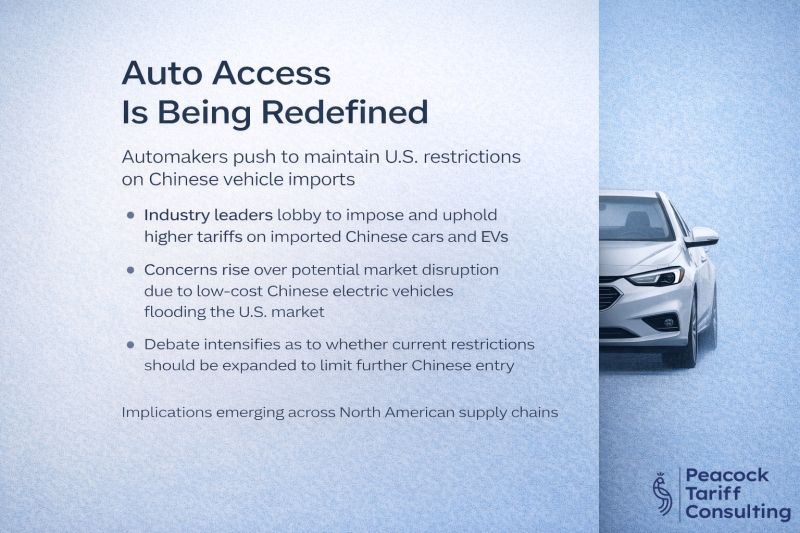
Introduction: When Trade Policy Extends Beyond Price The automotive industry stands at an inflection point where traditional trade tools-tariffs and quotas-no longer capture the full scope of trade policy concerns. Major automakers including Toyota and General Motors have recently urged the U.S. administration to maintain or even expand restrictions on Chinese vehicle imports. On the…
-
A Transformative Trade Agreement The newly finalized U.S.-Bangladesh trade agreement represents a significant recalibration of American tariff policy toward textile and apparel imports. Under the agreement’s centerpiece provision, textiles and apparel manufactured in Bangladesh from U.S.-origin cotton or fiber receive preferential duty-free treatment, entering the United States at a 0% tariff rate. By contrast, identical…
-
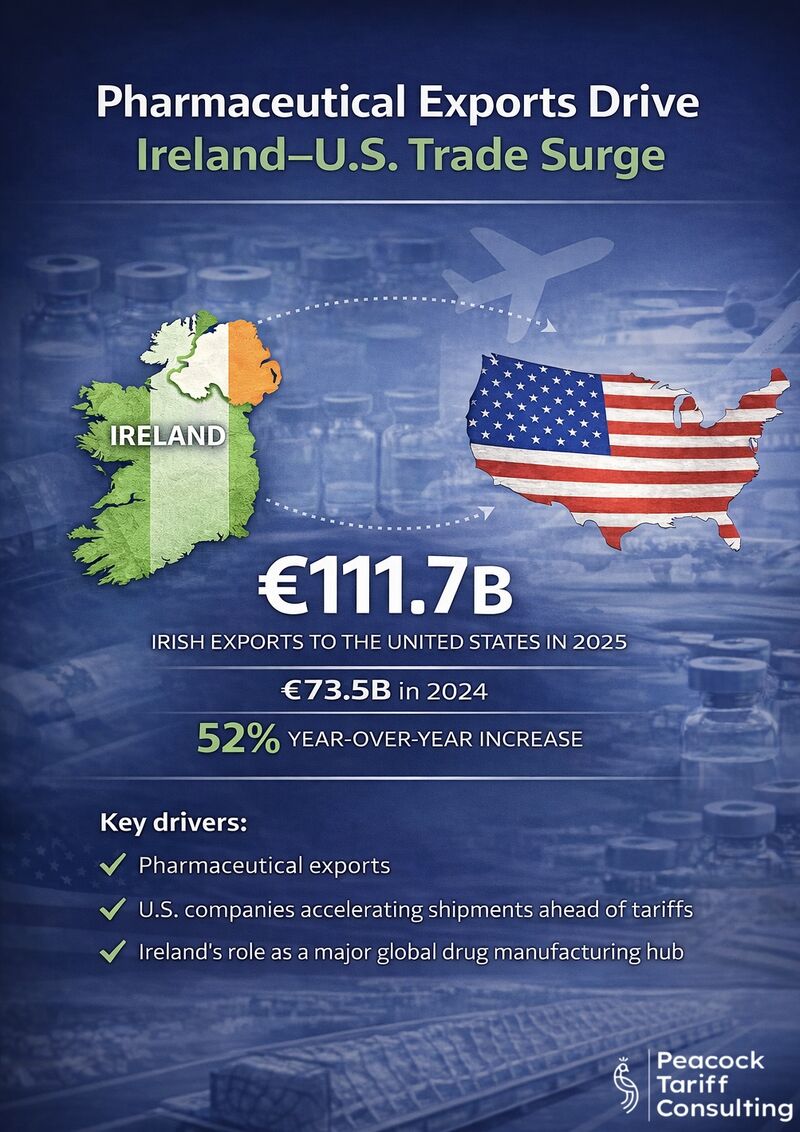
The Dramatic Export Growth Narrative Ireland’s exports to the United States surged 52% in 2025, a growth rate that initially appears exceptional and warrants celebration. At first glance, the statistics suggest a thriving bilateral trade relationship and expansion of Irish export capacity. However, the underlying dynamics driving this export growth tell a more nuanced story…
-
Executive Overview: A Phased Tariff Implementation Strategy New US tariffs targeting eight European countries represent a methodical escalation strategy rather than immediate comprehensive restriction. The phased approach, with duties jumping to 10% on February 1 and rising further to 25% by June, creates a distinct operational challenge for importers and manufacturers. This staggered schedule forces…
-
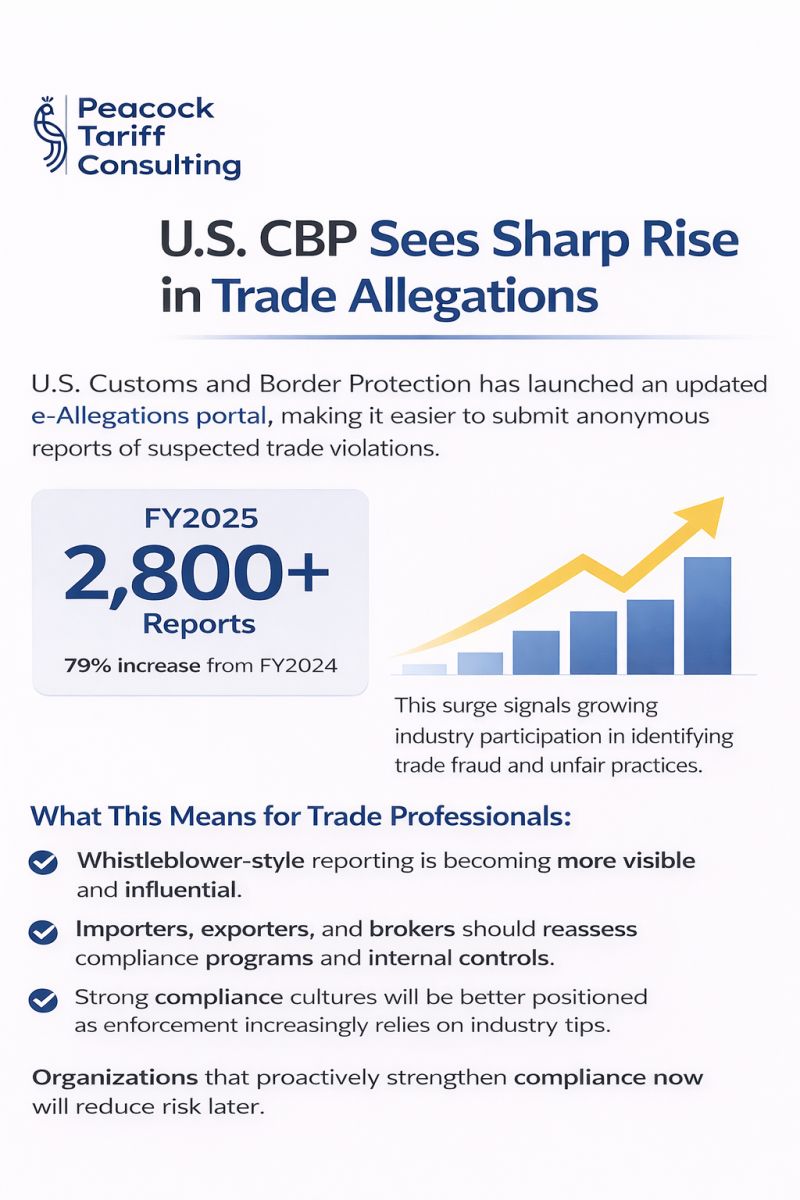
The Enforcement Environment Has Fundamentally Shifted A 79% surge in CBP trade allegations represents a dramatic escalation in enforcement activity that importers cannot afford to ignore. The 2,800-plus anonymous tips hitting CBP this year reflect not only increased regulatory scrutiny but also a reporting environment where competitors, employees, and industry participants have become de facto…
-
The New Reality: AI-Driven Enforcement Changes Everything The Customs and Border Protection agency has fundamentally transformed its approach to tariff administration in 2026. What was once a compliance issue managed through traditional audits and manual reviews has evolved into an automated, algorithmic enforcement system that operates in real-time across the entire supply chain. The integration…