
On November 13, 2025, President Donald J. Trump enacted a consequential amendment to Executive Order 14257, refining the scope of the reciprocal tariffs first introduced in April of the same year. This latest move exempts a carefully selected list of agricultural and input products from tariff obligations, signaling a strategic recalibration of U.S. trade enforcement. The decision reflects a blend of domestic production realities, consumer price sensitivity, and geopolitical leverage underscoring the administration’s broader goal of achieving reciprocal trade while safeguarding national economic interests.
Rather than a sweeping rollback, the administration has opted for surgical precision: removing tariffs only where they would harm U.S. consumers or undermine strategic trade negotiations, while preserving leverage in sectors where domestic production is viable or where foreign partners have yet to align with U.S. reciprocity goals. This approach reflects a deeper understanding of the interconnectedness between trade policy, supply chain resilience, and inflation control particularly in a post-pandemic, inflation-sensitive economy.
A Surgical Shift in Tariff Scope
The newly exempted products have been added to Annex II of Executive Order 14257 and include coffee and tea, tropical fruits and fruit juices, cocoa and spices, bananas, oranges, tomatoes, beef, and additional fertilizers. These goods were previously subject to reciprocal tariffs but are now excluded due to their limited domestic availability and high consumer demand. The PTAAP Annex short for “Potential Tariff Adjustments for Aligned Partners” has also been updated, retaining items such as aircraft parts, generic pharmaceutical inputs, and natural resources unavailable in the U.S. due to climate or geology. These items remain subject to tariffs unless future trade and security deals warrant their removal.
The administration’s approach here is tactical: by exempting only those goods that are either essential to consumers or strategically useful in negotiations, it avoids unnecessary inflationary pressure while maintaining the integrity of its broader trade enforcement strategy. This selective exemption model also sends a clear signal to trading partners alignment with U.S. trade and security interests can unlock tariff relief, but only through reciprocal engagement. The message is clear: the U.S. is open to trade, but only on terms that are fair, enforceable, and strategically aligned.
Tariff Impact Matrix: What’s Changing and Why It Matters
Each exempted product category carries distinct implications for consumers, importers, and domestic producers. Coffee and tea, for example, are staples of American consumption but are not grown domestically in commercial volumes. With HS codes 0901 and 0902, these imports primarily sourced from Brazil, Colombia, Vietnam, and Kenya will now enter the U.S. market tariff-free, reducing costs for households, cafes, and foodservice operators. This is particularly significant given the role of coffee in American culture and commerce; the U.S. is the world’s largest coffee importer, and even modest tariff changes can ripple through the entire supply chain, from port logistics to retail pricing.
Tropical fruits and juices (HS codes 0804 and 2009), such as mangoes, pineapples, and guava, are similarly exempted. These goods, often imported from Ecuador, the Philippines, and Mexico, are high-frequency grocery items whose affordability directly impacts food security and consumer well-being. Their exemption is likely to benefit not only consumers but also food processors, juice manufacturers, and hospitality businesses that rely on consistent, affordable access to these ingredients.
Cocoa and spices (HS codes 1801, 0904–0910), sourced from Ivory Coast, Ghana, and Indonesia, are essential inputs for chocolate manufacturers, bakeries, and packaged food producers. Their exemption will likely lead to lower prices for confectionery and spice-heavy products, benefiting both consumers and downstream industries. For small and mid-sized food manufacturers, this could mean improved margins or the ability to reinvest in product innovation and marketing.
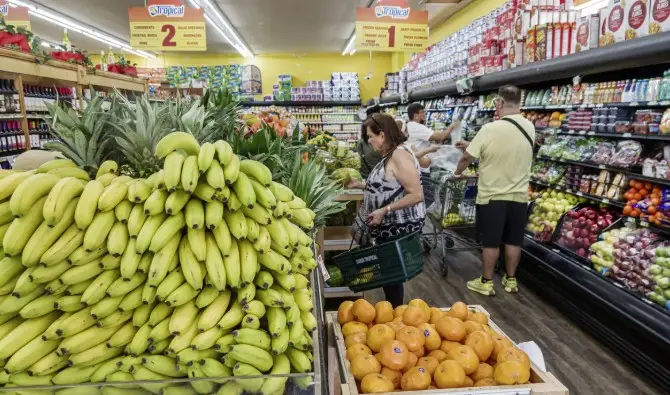
Bananas, oranges, and tomatoes (HS codes 0803, 0805, 0702) are among the most consumed produce items in the U.S., yet they are heavily reliant on imports from Latin America. Their removal from the tariff schedule supports food affordability, particularly for SNAP recipients and price-sensitive households. Retailers, food banks, and institutional buyers may also benefit from more stable supply chains and reduced procurement costs. These changes could help offset recent inflationary spikes in fresh produce and improve access to healthy food options in underserved communities.
Beef (HS codes 0201–0202), imported from Australia, New Zealand, and Brazil, is another high-impact exemption. With meat prices under pressure from inflation and supply chain disruptions, this move offers immediate relief to consumers and foodservice operators, while supporting competitive sourcing strategies for U.S. retailers. However, it may also raise concerns among domestic cattle producers, who could face increased competition from lower-cost imports. The administration appears to be betting that the benefits to consumers and downstream industries will outweigh the risks to domestic producers though this trade-off will require careful monitoring.
Finally, the expanded exemption for fertilizers (HS codes 3102–3105) lowers input costs for U.S. farmers, which could translate into downstream price relief on domestically grown produce and grains. This exemption not only supports agricultural competitiveness but also reinforces food affordability and supply chain resilience. Fertilizer costs have been a major pain point for U.S. farmers in recent years, and this policy shift could provide meaningful relief especially for small and mid-sized operations.
Strategic Rationale Behind the Exemptions
The administration’s decision to exempt only a select group of products rather than a broader swath of imports is rooted in a nuanced understanding of trade dynamics, domestic production realities, and consumer economics. First and foremost, many of the exempted goods are not grown or produced in the U.S. due to climate, geology, or infrastructure limitations. Imposing tariffs on these items would raise prices for consumers without offering any protective benefit to domestic industries. In fact, such tariffs could be seen as self-defeating penalizing American consumers and businesses for relying on imports that are, by necessity, sourced abroad.
Second, these goods are highly price-sensitive and widely consumed. Coffee, fruit, beef, and spices are staples in American households, and their affordability directly affects purchasing power especially for low-income families and food-insecure populations. In a political climate where inflation remains a top concern, the administration is clearly seeking to avoid policy moves that could exacerbate cost-of-living pressures. By targeting exemptions at high-impact consumer goods, the administration is attempting to thread the needle between trade enforcement and economic relief.
Third, the exemptions serve as diplomatic tools in ongoing trade negotiations. Many of the products are key exports for countries engaged in reciprocal trade talks with the U.S., and their exemption signals goodwill and strategic flexibility. This approach allows the administration to reward alignment and cooperation while maintaining pressure on holdout nations. It also provides a roadmap for future exemptions: align with U.S. trade and security goals, and tariff relief may follow.
Fourth, the fertilizer exemptions support domestic agriculture by lowering input costs, which can ripple downstream into food prices and farm profitability. This is particularly important in the context of global fertilizer shortages and price volatility, which have strained farm budgets and threatened food security. By easing these pressures, the administration is reinforcing the resilience of the U.S. food system and supporting rural economies.
By limiting exemptions to a narrow list, the administration preserves tariff leverage over other sectors such as pharmaceuticals, industrial goods, and aircraft components where future negotiations may require stronger enforcement tools. This allows the U.S. to maintain a credible threat of tariff escalation while demonstrating a willingness to negotiate in good faith. It’s a strategy of selective pressure and targeted relief, designed to maximize leverage while minimizing domestic blowback.
Who Benefits and Who Might Lose
The benefits of these exemptions are clear for certain segments of the U.S. economy. Consumers stand to gain from lower prices on everyday staples, particularly in categories where domestic alternatives are limited or nonexistent. Foodservice operators, grocers, and food manufacturers will benefit from reduced input costs and improved supply chain predictability. Farmers may see relief on fertilizer prices, which could improve margins and reduce the need for price hikes on domestically grown produce.
Importers and distributors of the exempted goods will also benefit, as tariff relief improves their cost structures and competitiveness. For example, a coffee importer sourcing from Colombia or a juice processor relying on Ecuadorian mango puree will now face lower landed costs, enabling more competitive pricing or higher margins. These benefits could cascade through the supply chain, supporting job retention and investment in logistics, warehousing, and retail.
However, the policy is not without risks or trade-offs. Domestic producers of beef, tomatoes, and other partially substitutable goods may face increased competition from lower-cost imports. While the administration has justified these exemptions on the grounds of insufficient domestic supply, producers may argue that the policy undermines their market share and pricing power. This could be particularly contentious in politically sensitive agricultural states, where producers are already grappling with labor shortages, climate volatility, and rising input costs.
There is also the risk that trading partners not included in the exemption calculus may perceive the policy as preferential or punitive, potentially complicating broader multilateral negotiations. For example, countries excluded from the current exemption list may retaliate or delay reciprocal concessions, especially if they view the U.S. approach as overly transactional or inconsistent.
Progress in Reciprocal Trade Negotiations
The tariff exemptions coincide with a surge in trade diplomacy and reciprocal deal-making. In less than a year, the administration has finalized reciprocal trade agreements with Malaysia and Cambodia, secured investment deals with Japan and Korea, and established frameworks with El Salvador, Argentina, Ecuador, Guatemala, Thailand, Vietnam, the UK, EU, and Switzerland. These agreements are not merely symbolic they represent a structural shift in how the United States approaches trade diplomacy. Instead of relying on multilateral institutions or legacy trade frameworks, the administration is pursuing bespoke, bilateral deals that prioritize reciprocity, enforceability, and strategic alignment.
For example, Cambodia’s commitment to eliminate tariffs on 100% of U.S. industrial and agricultural goods opens up a previously underutilized market for American exporters. This could benefit sectors ranging from machinery and vehicles to dairy and poultry industries that have long struggled with access barriers in Southeast Asia. Malaysia’s agreement to slash trade barriers and expand market access for U.S. goods further reinforces this trend, offering new opportunities for American manufacturers, farmers, and service providers.
The European Union’s pledge to purchase $750 billion in U.S. energy and invest $600 billion in the U.S. economy by 2028 is perhaps the most ambitious of these deals. It not only strengthens transatlantic energy security but also signals a deepening of economic ties at a time when global supply chains are being reconfigured. The EU’s acceptance of a 15% tariff rate while charging American companies zero demonstrates the leverage the U.S. has gained through its reciprocal tariff strategy. These deals are designed to eliminate distortive trade practices, expand market access for U.S. exports, and align trading partners with U.S. economic and national security priorities.
Sector-Specific Impacts: Winners and Watchpoints
The ripple effects of these tariff exemptions and trade deals will be felt across multiple sectors. In the food and beverage industry, manufacturers and retailers stand to benefit from lower input costs and improved supply chain reliability. This could lead to increased product innovation, expanded profit margins, and more competitive pricing especially in categories like coffee, chocolate, fruit juices, and spice blends. For small and mid-sized enterprises (SMEs), the exemptions may offer a lifeline, allowing them to compete more effectively with larger players who benefit from economies of scale.
In agriculture, the fertilizer exemptions could ease cost pressures and improve yield economics, particularly for crops like corn, soybeans, and wheat. This may help stabilize food prices and reduce volatility in commodity markets. However, domestic producers of beef, tomatoes, and other partially substitutable goods may face increased competition from lower-cost imports. This could lead to margin compression, market share erosion, and political pushback especially in regions where agriculture is a major economic driver.
In logistics and distribution, the exemptions may lead to increased import volumes for the affected goods, requiring adjustments in warehousing, customs processing, and transportation planning. Ports, freight forwarders, and customs brokers will need to update compliance protocols to reflect the new tariff status of these goods, while retailers and wholesalers may need to reassess sourcing strategies and inventory models.
In trade compliance and audit, the changes to Annex II and the PTAAP Annex will require updates to tariff classification tables, import documentation, and risk assessment frameworks. Companies that rely on automated classification tools or third-party compliance platforms will need to ensure that these systems are updated to reflect the new tariff landscape. Failure to do so could result in misclassification, overpayment of duties, or exposure to penalties.
Risks and Strategic Considerations
While the benefits of the exemptions are clear, there are also risks and strategic considerations that stakeholders must navigate. One risk is that the exemptions could create unintended dependencies on foreign suppliers, particularly in categories where domestic production could be scaled with the right incentives. For example, while the U.S. does not currently produce large volumes of tropical fruits or cocoa, there may be long-term opportunities to develop controlled-environment agriculture or alternative sourcing models. Blanket exemptions could discourage investment in these areas.
Another risk is that the exemptions could be perceived as preferential or politically motivated, potentially complicating broader multilateral negotiations. Countries excluded from the current exemption list may retaliate or delay reciprocal concessions, especially if they view the U.S. approach as overly transactional or inconsistent. This could undermine the credibility of the reciprocal trade framework and limit its effectiveness as a diplomatic tool.
There is also the risk of domestic backlash, particularly from producers who feel disadvantaged by the exemptions. While the administration has emphasized that the exempted goods are not produced in sufficient quantities domestically, this claim may be contested by industry groups, trade associations, or regional lawmakers. If these stakeholders mobilize effectively, they could pressure the administration to reverse or revise the exemptions creating uncertainty for importers and complicating compliance planning.
Finally, there is the challenge of implementation. Updating tariff schedules, customs protocols, and compliance systems is a complex undertaking that requires coordination across multiple agencies and stakeholders. Delays or inconsistencies in implementation could create confusion, disrupt supply chains, and expose businesses to legal and financial risk. Stakeholders must remain vigilant, monitor regulatory updates, and engage proactively with trade counsel and compliance experts to ensure readiness.
Conclusion: A New Phase in U.S. Trade Enforcement
Executive Order 14257’s latest amendment marks a pivotal moment in the evolution of U.S. trade strategy. By selectively exempting high-impact consumer and input goods from reciprocal tariffs, the administration is demonstrating a willingness to balance enforcement with economic pragmatism. This approach reflects a deeper understanding of the trade-offs inherent in tariff policy and a commitment to using trade tools strategically not just punitively.
For U.S. consumers, the exemptions offer immediate relief on everyday staples, helping to mitigate inflation and improve food affordability. For businesses, they offer new opportunities for cost savings, market expansion, and supply chain optimization. For trade advisors and compliance professionals, they signal a shift toward more dynamic, data-driven enforcement one that requires constant vigilance, strategic foresight, and operational agility.
At the same time, the policy carries risks: potential backlash from domestic producers, diplomatic friction with excluded partners, and implementation challenges that could disrupt trade flows. Navigating these risks will require careful coordination, transparent communication, and a willingness to adapt as the trade landscape evolves.
Ultimately, the amendment to Executive Order 14257 is more than a technical adjustment it is a strategic signal. It tells the world that the United States is serious about reciprocal trade, but also thoughtful about how it enforces its rules. For stakeholders across the spectrum from importers and retailers to farmers and policymakers the message is clear: trade enforcement is entering a new phase, and those who adapt early will be best positioned to thrive.
#TariffStrategy #TradeCompliance #ExecutiveOrder14257 #SupplyChainResilience #FoodSecurity #SMEAdvisory #TradePolicy #ImportExport #ConsumerImpact #Peacocktariffconsulting #Tariffedge