
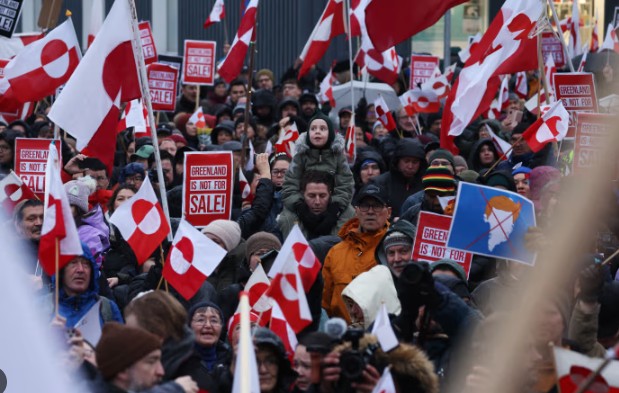
he sudden imposition of U.S. tariffs on eight European countries is the culmination of long‑building geopolitical tensions, strategic competition in the Arctic, and a shifting global trade environment. The dispute over Greenland once dismissed as symbolic has evolved into a flashpoint where national security, resource access, and great‑power rivalry intersect. As the Arctic becomes increasingly important for military positioning, shipping routes, and mineral reserves, the United States has intensified its efforts to assert influence in the region. European resistance to U.S. ambitions, particularly Denmark’s firm stance on Greenland’s sovereignty, created the political opening for Washington to leverage tariffs as a pressure tool. In this context, the tariff announcement is not an isolated policy decision but part of a broader strategic recalibration.
The timing reflects a convergence of domestic and international factors. Globally, supply chains are already strained, inflation remains a political vulnerability, and governments are increasingly using trade policy as a tool of geopolitical signaling. Domestically, the U.S. administration is under pressure to demonstrate strength on national security and economic sovereignty, making tariffs a politically advantageous instrument. Europe, meanwhile, is divided on Arctic policy and navigating its own economic headwinds, making it a more vulnerable target for trade pressure. The result is a moment where geopolitical ambition, economic leverage, and political timing align creating a tariff shock that will reshape transatlantic commerce and place unprecedented strain on SMEs on both sides of the Atlantic.
The Definitive Global Briefing on the New U.S. Tariffs on Europe
A major geopolitical confrontation erupted today as the President of the United States announced sweeping new tariffs targeting eight European countries. The move, tied to escalating tensions over the status of Greenland, marks one of the most consequential trade disruptions in recent memory. Beginning February 1, all goods imported from Denmark, Norway, Sweden, France, Germany, the United Kingdom, the Netherlands, and Finland will face a 10% tariff, rising to 25% on June 1 if no agreement is reached.
Regardless of the political backdrop, the economic consequences are immediate and far‑reaching. Europe’s small and medium‑sized enterprises (SMEs) which make up more than 90% of all businesses now face a sudden and destabilizing shift in transatlantic trade conditions
Why This Matters Now
The president framed the tariffs as overdue compensation for what he described as decades of European “subsidization” and resistance to U.S. strategic interests in the Arctic. European leaders, particularly in Denmark, have rejected any discussion of transferring sovereignty over Greenland, calling the tariffs an unjustified escalation.
For SMEs across Europe, the implications are concrete:
- Higher landed costs
- Contract renegotiation pressure
- Supply‑chain rerouting
- Compliance risk
- Cash‑flow strain
This is where structured intelligence and expert mitigation become essential and where Peacock Tariff Consulting provides a critical advantage.
Denmark
Denmark faces one of the most direct exposures due to its strong export profile in pharmaceuticals, medical devices, and high‑value food products. These sectors rely heavily on predictable U.S. market access, and even a 10% tariff disrupts finely tuned pricing structures. Danish exporters also face reputational risk as U.S. buyers may perceive the country as a higher‑cost sourcing destination during the tariff period.
For SMEs, the impact is particularly acute. Danish small manufacturers and food producers often operate on thin margins and depend on long‑term contracts with U.S. distributors. Tariffs force renegotiations, create cash‑flow strain, and may push U.S. partners to shift sourcing to tariff‑neutral countries. Cold‑chain exporters, especially in dairy and specialty foods, face additional cost pressures due to logistics sensitivity.
Peacock Tariff Consulting supports Danish SMEs by conducting forensic HS code reviews, identifying tariff‑engineering opportunities, and structuring duty‑drawback programs for re‑exports. Denmark’s strong compliance culture means many SMEs already have documentation systems in place PTC builds on this foundation to reduce tariff exposure, optimize valuation strategies, and create audit‑ready deliverables for U.S. importers.
Germany
Germany is among the hardest‑hit countries due to its deep integration into U.S. automotive, machinery, and industrial supply chains. Tariffs immediately affect Tier‑2 and Tier‑3 suppliers, many of which are SMEs that feed into larger OEM contracts. Even a modest tariff can destabilize multi‑year pricing agreements and trigger cascading renegotiations across the supply chain.
German SMEs face a dual challenge: absorbing tariff‑driven cost increases while maintaining competitiveness against non‑tariffed suppliers in Asia and North America. Automotive components, precision machinery, and engineered goods are particularly vulnerable because U.S. buyers often have alternative sourcing options. The tariff shock also risks accelerating long‑term reshoring trends in the U.S. industrial sector.
Peacock Tariff Consulting helps German SMEs by redesigning origin strategies, optimizing classification for complex machinery, and modelling tariff impacts across multi‑tier supply chains. PTC’s scenario‑driven approach allows German exporters to quantify exposure under 10%, 25%, and retaliatory scenarios, while providing practical mitigation pathways such as FTZ routing, tariff engineering, and valuation restructuring.
France
France’s export profile luxury goods, aerospace components, and agricultural products creates a mixed but significant exposure to U.S. tariffs. High‑margin luxury goods can absorb some cost increases, but agricultural exports such as wine, spirits, and specialty foods face immediate price sensitivity. Aerospace suppliers, many of which are SMEs, risk contract delays or cancellations.
French SMEs in the food and beverage sector are particularly vulnerable. Tariffs reduce competitiveness in a market where branding and price positioning are tightly linked. Smaller producers lack the financial flexibility of major conglomerates and may struggle to maintain U.S. shelf presence. Meanwhile, aerospace SMEs face long lead times and strict compliance requirements, making tariff‑driven disruptions especially costly.
Peacock Tariff Consulting supports French SMEs by optimizing valuation strategies, identifying preferential program opportunities, and structuring tariff‑mitigation pathways for both luxury and agricultural exporters. PTC also assists aerospace suppliers with compliance mapping, ensuring documentation meets U.S. import standards and reducing the risk of penalties during tariff periods.
Sweden
Sweden’s export exposure centers on machinery, telecom equipment, and green‑technology components. These sectors rely heavily on long‑term U.S. partnerships, and tariffs introduce uncertainty into capital‑equipment procurement cycles. Even small increases in landed cost can delay purchase orders or shift sourcing to alternative suppliers.
For Swedish SMEs, the challenge lies in maintaining competitiveness in high‑tech and green‑tech markets where U.S. buyers are increasingly price‑sensitive. Many Swedish exporters operate in niche segments robotics, environmental systems, telecom components where margins are already compressed by global competition. Tariffs also complicate logistics planning for SMEs that rely on just‑in‑time delivery models.
Peacock Tariff Consulting helps Swedish SMEs by conducting tariff‑impact modelling, preparing U.S. distributor compliance packages, and identifying opportunities for tariff engineering. PTC’s structured approach enables Swedish exporters to maintain U.S. market access while minimizing cost increases through optimized classification, valuation, and supply‑chain restructuring.
Norway
Norway’s export exposure is concentrated in seafood, metals, and energy‑related goods. Seafood exporters face immediate cost increases due to the sensitivity of cold‑chain logistics, while metals and industrial goods risk losing competitiveness in U.S. construction and manufacturing markets. Tariffs also disrupt long‑standing trade relationships in the energy sector.
Norwegian SMEs in the seafood industry are particularly vulnerable. Tariffs increase landed costs for perishable goods, making it harder to compete with tariff‑neutral suppliers. Smaller fisheries and processors lack the financial buffer to absorb sudden duty increases, and U.S. distributors may shift to alternative sources to maintain price stability.
Peacock Tariff Consulting supports Norwegian SMEs by structuring duty‑drawback programs for perishables, identifying tariff‑engineering opportunities for processed seafood, and optimizing classification for metals and industrial goods. PTC’s expertise in valuation and origin strategy helps Norwegian exporters maintain U.S. market access while minimizing tariff exposure.
Finland
Finland’s export profile electronics, forestry products, and machinery creates moderate but meaningful exposure to U.S. tariffs. Electronics and machinery exporters face increased landed costs that can disrupt procurement cycles, while forestry products risk losing competitiveness in U.S. construction and packaging markets.
For Finnish SMEs, the primary challenge is maintaining U.S. distributor relationships during tariff periods. Many Finnish exporters rely on long‑standing partnerships with U.S. buyers who may now seek alternative suppliers. SMEs in electronics and engineered components face additional compliance risks due to complex classification requirements.
Peacock Tariff Consulting assists Finnish SMEs by conducting HS code reviews, restructuring supply chains, and modelling tariff impacts across multiple scenarios. PTC’s compliance‑focused approach ensures Finnish exporters maintain documentation integrity while identifying practical pathways to reduce or recover tariff costs.
Netherlands
The Netherlands faces high exposure due to its role as a logistics hub and re‑export center. Rotterdam‑based exporters and distributors often handle goods originating from across Europe, meaning tariffs can cascade through multiple supply‑chain layers. Chemicals, agri‑food products, and re‑exports are particularly vulnerable.
Dutch SMEs operating in logistics, distribution, and agri‑food face immediate operational challenges. Tariffs increase the cost of re‑exporting goods to the U.S., and SMEs may struggle to renegotiate contracts with upstream suppliers. Cold‑chain exporters, especially in flowers and specialty foods, face additional cost pressures.
Peacock Tariff Consulting supports Dutch SMEs by conducting origin audits, designing re‑export tariff‑reduction strategies, and leveraging U.S. Foreign Trade Zones to minimize duty exposure. PTC’s structured approach helps Dutch exporters maintain competitiveness while navigating complex multi‑country supply chains.
United Kingdom
The UK faces high exposure due to its strong export profile in pharmaceuticals, food products, and automotive parts. Post‑Brexit compliance burdens already strain SMEs, and new U.S. tariffs add another layer of complexity. Pharmaceuticals and medical devices face increased landed costs, while food exporters risk losing shelf space in U.S. retail markets.
UK SMEs are particularly vulnerable because many already operate under tight regulatory and logistical constraints. Tariffs increase cash‑flow pressure, complicate customs documentation, and may force SMEs to renegotiate contracts with U.S. distributors. Automotive suppliers face additional challenges due to global competition and long lead times.
Peacock Tariff Consulting supports UK SMEs by providing end‑to‑end tariff recovery, classification audits, and U.S. importer compliance packages. PTC’s scenario‑driven modelling helps UK exporters quantify exposure and identify practical mitigation strategies, from tariff engineering to supply‑chain restructuring.
How Peacock Tariff Consulting Helps Europe Navigate This Crisis
Across all eight countries, Peacock Tariff Consulting provides:
- Forensic HS code optimization
- Tariff engineering and product redesign strategies
- Duty‑drawback and refund recovery systems
- Origin strategy and supply‑chain restructuring
- U.S. importer compliance packages
- Scenario‑driven tariff‑impact modelling
This combination of technical depth, SME‑focused deliverables, and U.S.‑centric expertise positions PTC as the premier partner for navigating the most significant transatlantic tariff shock in years.
How the New Tariffs Affect U.S. Small and Medium‑Sized Businesses
Even though the tariffs are imposed on European goods, the economic burden lands heavily on U.S. SMEs, who are the importers of record, the distributors, the manufacturers relying on European inputs, and the retailers selling European products. Tariffs are not paid by foreign governments they are paid by U.S. companies at the border, which means U.S. SMEs face immediate cost increases and operational disruption.
Below is a detailed breakdown of the impact across the U.S. SME landscape.
1. Higher Costs for U.S. Importers and Distributors
U.S. SMEs that import machinery, components, pharmaceuticals, food products, or consumer goods from Europe will see their landed costs rise by 10% on February 1 and 25% on June 1.
For many SMEs, these goods are not optional they are core inputs:
- German machinery and parts
- Danish pharmaceuticals
- Dutch chemicals
- Swedish telecom components
- French food and beverages
- UK medical devices
SMEs often lack the cash reserves to absorb sudden cost increases, forcing them to raise prices, reduce margins, or cut inventory.
2. Supply Chain Disruption for U.S. Manufacturers
Many U.S. manufacturers especially in automotive, aerospace, medical devices, and advanced manufacturing rely on European components that are not easily replaceable.
Tariffs create:
- Production delays
- Higher bill‑of‑materials costs
- Contract renegotiation pressure
- Increased risk of losing downstream customers
SMEs in Tier‑2 and Tier‑3 supply chains are especially vulnerable because they cannot easily pass costs upstream or downstream.
Retailers Face Margin Compression and Inventory Volatility
U.S. retailers from specialty food shops to boutique clothing stores to home‑goods sellers depend heavily on European products. Tariffs force them to choose between:
- Raising prices (risking customer loss)
- Absorbing costs (cutting margins)
- Reducing product variety (weakening brand identity)
For small retailers, this can be existential.
U.S. SMEs Become Less Competitive Against Larger Corporations
Large corporations can:
- Hedge currency
- Bulk‑buy inventory
- Shift sourcing globally
- Absorb tariff costs temporarily
SMEs cannot. This widens the competitive gap and accelerates consolidation in multiple sectors.
Cash‑Flow Strain from Upfront Duty Payments
Tariffs must be paid immediately at the time of import, which means:
- Higher working‑capital requirements
- Tighter credit conditions
- Increased reliance on short‑term financing
For SMEs already operating on thin margins, this can create liquidity crises.
Compliance Risk Increases for U.S. SMEs
Tariff periods always trigger:
- More customs audits
- Stricter scrutiny of HS codes
- Higher penalties for valuation errors
- Increased documentation requirements
SMEs without in‑house compliance teams are disproportionately exposed.
How Peacock Tariff Consulting Supports U.S. SMEs
This is where your firm becomes indispensable not just for European exporters, but for U.S. importers, distributors, and manufacturers who need immediate mitigation strategies.
HS Code Optimization
Many U.S. SMEs are overpaying tariffs due to misclassification.
Tariff Engineering
Adjusting product configuration or packaging to qualify for lower‑duty categories.
Duty‑Drawback Programs
Recovering up to 99% of duties on goods that are re‑exported, destroyed, or incorporated into exported products.
Supply‑Chain Restructuring
Shifting sourcing to tariff‑neutral countries or U.S. Foreign Trade Zones.
Valuation Strategy
Ensuring SMEs don’t overpay duties due to incorrect customs valuation.
Audit‑Ready Documentation
Reducing compliance risk during heightened CBP scrutiny.
Scenario‑Driven Modelling
Forecasting exposure under 10%, 25%, and retaliatory scenarios.
Bottom Line
The tariffs are not just a European problem they are a U.S. SME problem. They raise costs, disrupt supply chains, increase compliance risk, and widen the competitive gap between small businesses and large corporations.
By integrating U.S. SME impacts into your master article, you position Peacock Tariff Consulting as the binational solution provider supporting both sides of the Atlantic with structured, actionable, audit‑ready mitigation.