
A Strategic Chokepoint Under Challenge
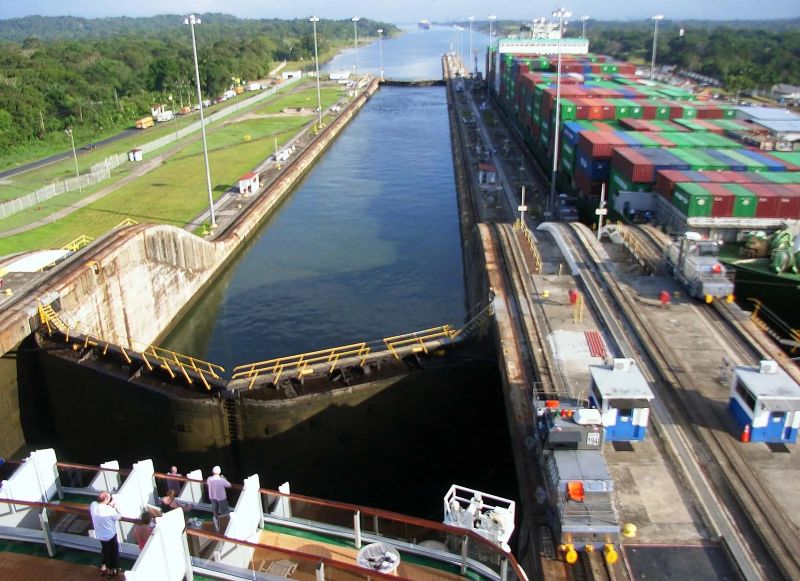
The Panama Supreme Court has voided the port concession held by CK Hutchison, one of the world’s largest container port operators, marking a profound shift in governance of the world’s most strategically important maritime chokepoint. The Panama Canal, which handles approximately 6% of global maritime trade and connects the Atlantic and Pacific Oceans, serves as the critical infrastructure through which roughly one-third of American international container trade flows. The court’s decision to void a major port concession is not a local legal dispute about contract interpretation—it represents a fundamental destabilization of the operational and political framework through which the Canal operates.
CK Hutchison, controlled by Hong Kong conglomerate Hutchison Whampoa, has operated several container terminals at the Canal’s entrance, serving as the primary gateway through which ships enter and exit the Canal system. The company’s concession, while valuable for its direct operations, is particularly significant because of broader geopolitical implications. CK Hutchison’s involvement in Canal operations has long been a source of concern for U.S. policymakers concerned about Chinese strategic influence over critical American infrastructure.
- Panama Supreme Court voided CK Hutchison port concession
- Hutchison operates critical container terminals at Canal entrance
- CK Hutchison controlled by Hong Kong conglomerate Hutchison Whampoa
- Canal handles 6% of global maritime trade
- Approximately one-third of American international container trade flows through Canal
The Geopolitical Dimensions
The concession revocation is not framed as a technical contract dispute but rather as a decision with geopolitical implications. The Panamanian court’s rationale, while presented in legal terms, reflects broader political concern about foreign control of critical Canal infrastructure. For the United States, Chinese operational presence at the Canal has been a long-standing concern. U.S. policymakers have worried that Chinese companies operating Canal infrastructure could potentially restrict access or gather intelligence on American maritime activities.
From Panama’s perspective, the revocation may reflect calculation that Chinese operational presence, while economically valuable through concession fees, creates political vulnerability. Panama’s relationship with the United States is economically critical—American remittances, investment, and trade are central to Panama’s economy. Revoking a Chinese company’s concession signals alignment with U.S. concerns about Chinese operational presence. The timing, coinciding with broader U.S.-China geopolitical friction, suggests coordination or at least alignment of interests between Panama and the United States.
- Concession revocation reflects U.S. concern about Chinese strategic influence
- U.S. worried about potential Chinese restriction of Canal access
- U.S. concerned about intelligence gathering at American infrastructure
- Panama dependent on American economic relationships
- Revocation signals Panama-U.S. alignment on Chinese presence
Operational Disruption and Uncertainty
Immediately, the concession revocation creates operational uncertainty at the Canal. Container traffic that previously moved through CK Hutchison terminals must now find alternative routing or wait for a new operator to assume control. This creates congestion, delays, and increased logistics costs for ships using the Canal. For American importers, this translates to delays in receiving imported goods and increased transportation costs that get passed through supply chains.
The duration of this disruption depends on how quickly Panama can identify and transition to a replacement operator. If the transition occurs smoothly with minimal operational downtime, disruption may be measured in weeks. If the transition is contested or involves legal challenges from CK Hutchison, or if new operators take time to establish operations, disruption could persist for months. Container ships are increasingly time-sensitive cargo, and weeks of delay can disrupt just-in-time supply chain relationships and increase inventory carrying costs across American supply chains.
- Concession revocation creates immediate operational uncertainty
- Container traffic must be rerouted to alternative terminals
- Congestion and delays likely during transition period
- Increased logistics costs impact supply chain delays
- American importers face delayed deliveries and increased transportation costs
The U.S.-China Friction Point
The Panama Port situation represents a new friction point in the broader U.S.-China geopolitical competition. While most U.S.-China tensions focus on trade policy, technology competition, and military presence in Asia, the Panama situation involves a Chinese company’s operational control over infrastructure critical to American trade and security. The concession revocation, while framed in Panamanian legal terms, is understood by U.S. policymakers as a victory in managing Chinese presence at critical American infrastructure access points.
China’s response to the revocation will be important to monitor. China could accept the revocation and work with Panama on alternative arrangements, signaling acceptance of Panamanian sovereignty and U.S. concerns. Alternatively, China could view the revocation as geopolitical pushback against Chinese interests and escalate tensions through retaliation or alternative initiatives. The revocation also has implications for Chinese infrastructure investments throughout the hemisphere, as Panama’s action signals potential consequences for Chinese operational presence in strategically sensitive locations.
- Panama Port situation represents new U.S.-China friction point
- Involves Chinese operational control over American trade infrastructure
- Concession revocation understood as geopolitical victory by U.S.
- China’s response to revocation will indicate tolerance for Western pressure
- Implications for Chinese infrastructure investments throughout hemisphere
Heightened Scrutiny of China-Linked Logistics
The Panama Port decision will likely trigger heightened U.S. scrutiny of other China-linked logistics and infrastructure operations. American companies utilizing logistics services provided by Chinese companies, or importing through ports with Chinese operational presence, may face government pressure or legal challenge. Port security regulations, Container Security Initiative compliance, and broader supply chain security reviews may increasingly focus on identifying and limiting Chinese operational presence in American import logistics.
For American importers, this creates new risk factors in supply chain planning. Using logistics providers with Chinese operational presence may create regulatory exposure or supply chain vulnerability. Companies should audit their logistics relationships to understand Chinese ownership or operational presence and evaluate whether regulatory or security concerns merit supply chain restructuring. The geopolitical environment is increasingly hostile to Chinese operational presence in American logistics, and companies should assume that this environment will persist and potentially intensify.
- U.S. scrutiny increasing for China-linked logistics operations
- Port security regulations may target Chinese operational presence
- Container Security Initiative compliance reviewed for Chinese involvement
- American companies may face pressure to avoid China-linked providers
- Regulatory exposure for importers using Chinese logistics operators
Alternative Routing and Supply Chain Resilience
The Panama Port situation highlights the vulnerability created when American supply chains depend on a single geographic chokepoint controlled by operators with geopolitical sensitivities. While the Panama Canal cannot be replaced—it is geographically irreplaceable—supply chain disruption risk can be reduced through route diversification and logistics planning that accounts for potential disruptions.
Some shippers are already evaluating alternative routing through the Suez Canal and around the Cape of Good Hope, longer routes that increase transit times and costs but avoid Panama Canal dependence. For some product categories and trade lanes, these alternative routes are viable. For others, particularly time-sensitive shipments from Asia to North America, the Panama Canal remains the only economically viable route. Companies should evaluate their exposure to Panama Canal disruption and plan contingency supply chain adjustments for the scenario in which Canal operations are disrupted for extended periods.
- Panama Canal is geographic chokepoint for Asia-North America trade
- Alternative routes (Suez, Cape of Good Hope) longer but available
- Alternatives increase transit times and costs significantly
- Time-sensitive shipments from Asia have limited alternatives
- Companies should evaluate Canal disruption exposure