
The United Kingdom and the United States are locked in negotiations to resolve tariffs on British steel and Scotch whisky measures that have strained trade relations since 2018. These tariffs, originally imposed under the Trump administration’s Section 232 national security justification, have had significant economic and political consequences. Steel tariffs of 25% and whisky levies of 10% have cost UK industries hundreds of millions of pounds, disrupted supply chains, and fueled political tensions on both sides of the Atlantic. While progress has been made on steel through a tariff-rate quota system under the Economic Prosperity Deal (EPD), whisky remains unresolved. The outcome of these talks will influence future trade norms, industrial policy, and the credibility of the transatlantic alliance in a multipolar world.
The negotiations are not just about economics they are about signaling. If two of the world’s closest allies cannot resolve a relatively narrow dispute, it raises questions about their ability to cooperate on emerging issues such as digital trade, climate-linked tariffs, and supply chain security. Public opinion in the US is divided: consumers oppose tariffs because they raise prices on Scotch whisky, while steel workers favor them as a safeguard for jobs. The resolution will set a precedent for future cooperation and could reshape global trade architecture.
Background
The origins of this dispute date back to March 2018, when the Trump administration invoked Section 232 of the Trade Expansion Act of 1962. This provision allowed tariffs to be imposed on steel and aluminum imports under the justification of national security. The UK, then still under EU trade frameworks, was swept into these measures, facing a 25% tariff on steel and a 10% tariff on Scotch whisky. The rationale was to protect US steelmakers from global oversupply and ensure domestic production for defense needs. Critics, however, argued that the move was politically motivated and economically disruptive, sparking immediate backlash from affected industries.
Brexit amplified the UK’s vulnerability in this dispute. Losing the EU’s negotiating leverage meant Britain had to strike bilateral deals to protect its industries. Tariffs became symbolic of sovereignty and industrial resilience, making their removal a political priority for London. For the UK government, resolving these tariffs is not just about economics it is about demonstrating that post-Brexit Britain can secure favorable trade terms independently.
This standoff mirrors past transatlantic conflicts, such as the Boeing-Airbus subsidy dispute, which dragged on for decades. Both cases highlight how trade disagreements often spill beyond economics into diplomacy and domestic politics. They also underscore the complexity of resolving disputes when national pride and strategic industries are involved.
Impact
The economic impact of these tariffs has been severe for both steel and whisky sectors. The UK steel industry employs approximately 33,000 workers and contributes billions to the national economy. The United States is a critical export market, accounting for about 9% of UK steel exports. Since the imposition of tariffs, UK steel exports to the US have fallen by nearly 40%, compounding challenges from high energy costs and global oversupply. Companies like Tata Steel and British Steel have warned of closures and job losses if relief does not arrive soon.
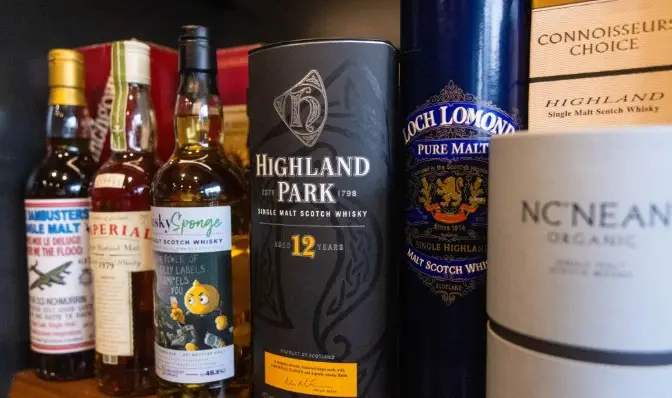
The Scotch whisky industry has faced equally damaging consequences. As a cultural export worth £6 billion annually, Scotch whisky is a cornerstone of the UK’s global trade identity. The US is its largest single market, but tariffs have caused an estimated £600 million in lost sales since 2018. Smaller distilleries, lacking the financial cushion of global giants, have been hit hardest, with some exiting the US market entirely. American retailers report shortages and higher prices for premium Scotch brands, frustrating consumers and eroding brand loyalty.
These figures underscore why both sectors view tariff relief as existential, not optional. For steel, the issue is survival in a competitive global market. For whisky, it is about maintaining cultural prestige and economic viability in its most lucrative market.
Negotiation Timeline and Milestones
The dispute has evolved through several key milestones. In 2018, tariffs were imposed under Section 232, triggering retaliatory UK tariffs on American whiskey and motorcycles. Between 2019 and 2021, these measures remained in place, straining relations and prompting lobbying efforts on both sides. In 2022, the UK suspended its retaliatory tariffs in a gesture of goodwill, hoping to reset relations post-Brexit. However, the US maintained its duties, leaving British negotiators frustrated.
The breakthrough came in mid-2025 with the announcement of the Economic Prosperity Deal (EPD). This framework introduced a tariff-rate quota system for steel, allowing duty-free access for UK producers meeting strict origin requirements such as the “melted and poured” rule. While promising, implementation has been slow due to technical disputes over eligibility and compliance. Whisky, however, remains outside the scope of the EPD, despite intense lobbying by the Scotch Whisky Association and pressure from UK ministers.
Political Dynamics
The negotiations are deeply entangled with domestic politics in both countries. In the United States, tariff removal is politically sensitive, especially in swing states with steel production such as Pennsylvania and Ohio. Labor unions have lobbied aggressively to maintain protections, framing tariffs as essential for job security. The presidential election cycle amplifies reluctance to concede, as candidates seek to avoid appearing weak on trade.
In the UK, post-Brexit trade strategy emphasizes bilateral deals to showcase Britain’s independence. Pressure from the whisky industry and Scottish MPs has intensified, making tariff relief a political imperative. However, London faces tough choices, as Washington seeks concessions on agricultural imports and labeling standards in exchange for progress on whisky tariffs.
Legal uncertainty adds another layer of complexity. Ongoing US court challenges to Trump-era tariffs could reshape the negotiating landscape overnight, potentially rendering current strategies obsolete.
Expert Commentary
Trade economists view these negotiations as emblematic of broader trends in global commerce. Dr. Fiona McAllister of the London School of Economics argues, “If the UK and US can’t resolve this, it raises doubts about their ability to cooperate on digital trade or climate-linked tariffs.” Professor James Carter of Georgetown University adds, “Steel represents industrial security; whisky represents cultural diplomacy. The outcome will influence future trade architecture.” Elena Ruiz of the Global Trade Forum predicts ripple effects: “Concessions here could set precedents for other sectors lobbying for tariff relief.”
Public Sentiment and Cultural Dimensions
For most Americans, this is not a headline issue but its effects are felt. Whiskey enthusiasts have noticed higher prices and reduced availability of premium Scotch brands, sparking frustration and substitution with bourbon or Canadian alternatives. In steel-producing states, tariffs are viewed as protective measures that safeguard local jobs. Polling suggests a majority in these regions support maintaining some form of trade barrier, even if it complicates international relations. Outside these sectors, awareness is low; concern rises only when costs hit wallets or traditions.
As Professor Carter notes, “People care when it hits their wallet or their traditions. For the average American, this is less about geopolitics and more about whether their favorite Scotch costs $20 more at the liquor store.”
Global Trade Context
This dispute reflects broader trends: the resurgence of protectionism, the politicization of trade, and the growing emphasis on supply chain security. Its resolution will signal whether advanced economies can adapt to a multipolar world where trade is increasingly weaponized. Success could pave the way for cooperation on carbon border adjustments, AI governance, and digital trade. Failure risks fragmentation and emboldens protectionist voices globally.
Future Scenarios
In the best-case scenario, steel tariffs are lifted under the quota system, and whisky tariffs are removed via reciprocal concessions. This would strengthen the UK-US trade partnership and send a positive signal to global markets. In the worst-case scenario, talks collapse and tariffs persist, prompting the UK to pivot toward EU and Asia-Pacific trade blocs while the US faces credibility challenges.
Recommendations include linking whisky tariff removal to concessions on labeling and agricultural standards, framing tariff relief as pro-consumer and pro-innovation to offset political risk, and encouraging industries to diversify markets and invest in compliance for quota systems.