
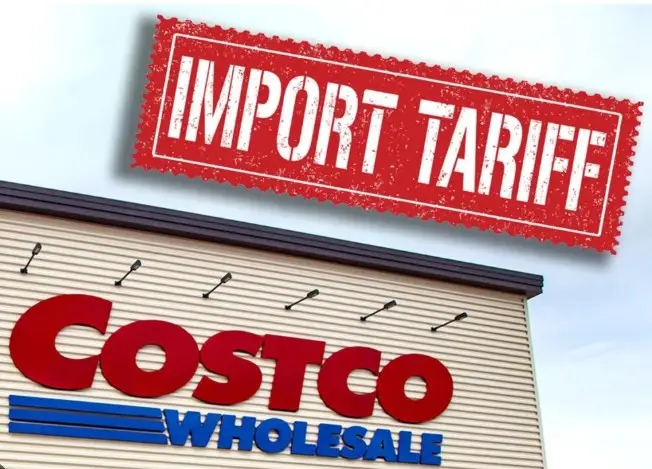
Costco’s lawsuit against the U.S. government over tariffs is more than a corporate safeguard it’s a pivotal domino in a chain reaction that could reshape American retail, global trade, and presidential authority. With billions at stake, the case has shifted sentiment toward a Supreme Court ruling that may strike down the tariffs altogether.
Background: The Tariffs and the Legal Challenge
- In 2025, President Trump imposed sweeping tariffs under the International Emergency Economic Powers Act (IEEPA), citing national security concerns.
- These tariffs were unprecedented in scale: up to 145% on Chinese imports and 50% on goods from India and other countries.
- The result: U.S. companies and consumers paid tens of billions of dollars in duties, inflating costs across categories from electronics to apparel.
- Two lower courts the Court of International Trade and the Federal Circuit Court of Appeals have already ruled the tariffs illegal, arguing IEEPA was never intended to authorize broad tariff regimes.
Costco’s Lawsuit: Why It’s a Big Domino
- Filed Nov. 28, 2025 in the U.S. Court of International Trade, Costco’s lawsuit seeks a complete refund of duties paid if the Supreme Court rules the tariffs unlawful.
- Refunds are not automatic companies must file their own suits to preserve eligibility. Costco’s move ensures it won’t be left behind.
- Scale matters: Costco is a retail giant with over $250 billion in annual revenue and massive import volumes. Its participation signals that mainstream retail is now fully engaged in the legal fight.
- Other companies have already filed similar suits: Revlon, EssilorLuxottica, Kawasaki Motors, among others.
Supreme Court Sentiment: How Predictions Have Shifted
- Immediately after oral arguments (Nov. 5, 2025): Analysts predicted a narrow 5–4 ruling in favor of the government, citing deference to presidential authority.
- Mid-November: Sentiment shifted toward a possible 5–4 ruling against tariffs, as justices questioned the scope of IEEPA.
- After Costco’s lawsuit (Nov. 28): Predictions strengthened to a 6–3 ruling against tariffs, reframing the case as a $90 billion economic battle.
- Early December: With dozens of companies filing suits, consensus has tilted further, with some experts forecasting a 7–2 ruling against tariffs.
Wall Street’s Push Into Tariff Debt
As predictions of a Supreme Court strike‑down have grown stronger, Wall Street has aggressively moved into the tariff debt market.
- Discounted purchases: Hedge funds and investment banks are buying tariff debt duties already paid by companies at 30–50 cents on the dollar.
- Profit mechanics: A $100 million claim purchased for $40 million could yield a $60 million profit if refunded.
- Mainstream trading: Once niche, tariff debt is now bundled into portfolios and traded like corporate bonds.
- Liquidity lifeline: Retailers offload claims for immediate cash flow, while investors speculate on judicial outcomes.
- Market scale: With $90 billion in potential refunds, this could rival other distressed debt sectors.
- Acceleration in recent weeks: Since late November, trading has sped up dramatically. Investors are competing aggressively to acquire tariff debt before prices rise, driving up demand and creating a more liquid secondary market.
Next Steps and Timing of the Ruling
The Supreme Court has already heard oral arguments and placed the case on an accelerated track.
- Expected ruling: Most analysts anticipate a decision by June 2026, in line with the Court’s traditional schedule for major cases.
- Daily suits: Companies continue to file suits in the Court of International Trade to preserve refund rights. These filings do not slow down the Supreme Court’s timeline, but they highlight the urgency and scale of the issue.
- Parallel pressure: The growing number of suits adds visibility and reinforces how consequential the Court’s decision will be for retailers and Wall Street alike.
Guidance for Importers and How Peacock Tariff Consulting Can Help
For importers caught in the middle of this tariff battle, the path forward requires both legal and financial strategy. To preserve eligibility for refunds, importers must file their own case in the U.S. Court of International Trade. Engaging experienced trade counsel is critical firms like Crowell & Moring, Baker McKenzie, and ArentFox Schiff have already filed dozens of suits, while industry associations such as the National Retail Federation (NRF) and the American Apparel & Footwear Association (AAFA) provide collective lobbying power and resources.
Beyond legal filings, importers can explore financial options such as selling tariff debt to Wall Street investors at a discount to secure immediate liquidity. However, navigating these choices requires specialized expertise. This is where Peacock Tariff Consulting plays a vital role. With over 20 years of experience in global trade, Peacock helps importers correctly classify goods, ensure compliance with customs regulations, and strategically plan for refunds or tariff mitigation. Their services include:
- Tariff & Commodity Review: Ensuring goods are classified correctly to reduce overpayment risks.
- Regulatory Compliance Guidance: Keeping importers aligned with customs rules and documentation requirements.
- Refund Preparation: Assisting in compiling claims and documentation so importers are positioned to benefit if tariffs are struck down.
- Strategic Trade Planning: Designing long‑term strategies to minimize duties, diversify sourcing, and leverage agreements like CUSMA.
- Tailored Solutions: Providing individualized plans for small and medium‑sized businesses, ensuring unique needs are addressed.
With the Supreme Court ruling expected by mid‑2026, importers must act quickly. Peacock Tariff Consulting offers the expertise to file correctly, stay compliant, and make informed financial decisions while awaiting the Court’s decision.
Implications for Retailers
- Refund race: Costco’s lawsuit will likely trigger a cascade of filings from Walmart, Target, Amazon, and Home Depot.
- Supply chain recalibration: Retailers are diversifying sourcing to avoid tariff exposure. Costco has leaned on its Kirkland Signature brand and domestic suppliers.
- Investor confidence: By suing, Costco signals to shareholders it is actively protecting margins, while Wall Street’s involvement adds pressure for resolution.
Looking Ahead
- If tariffs are struck down: Retailers reclaim tens of billions. Wall Street investors profit massively. Presidential authority under IEEPA is curtailed.
- If tariffs are upheld: Retailers face permanent exposure. Wall Street loses its speculative bet. Consumers continue to bear higher costs.
Conclusion
Costco’s lawsuit is the domino that could topple the entire tariff regime. Its scale, timing, and symbolism have intensified pressure on the Supreme Court, changing predictions from a narrow government win to strong expectations of a decisive ruling against tariffs. Wall Street’s aggressive move into tariff debt buying at discounted rates, accelerating trading in the last two weeks, and mainstreaming it as a new asset class underscores how financial markets are betting on that outcome. For importers, the message is clear: file protective suits, seek expert counsel, and prepare financially. With firms like Peacock Tariff Consulting offering specialized support, businesses can navigate compliance, maximize refund opportunities, and build resilient trade strategies. With a ruling expected by mid‑2026 and daily suits piling up, the stage is set for one of the most consequential trade decisions in decades.
#CostcoTariffLawsuit #SupremeCourtDecision #TradePolicy #IEEPA #RetailIndustry #WallStreetMoves #TariffDebt #ImporterGuidance #PeacockTariffConsulting #GlobalTradeShift