
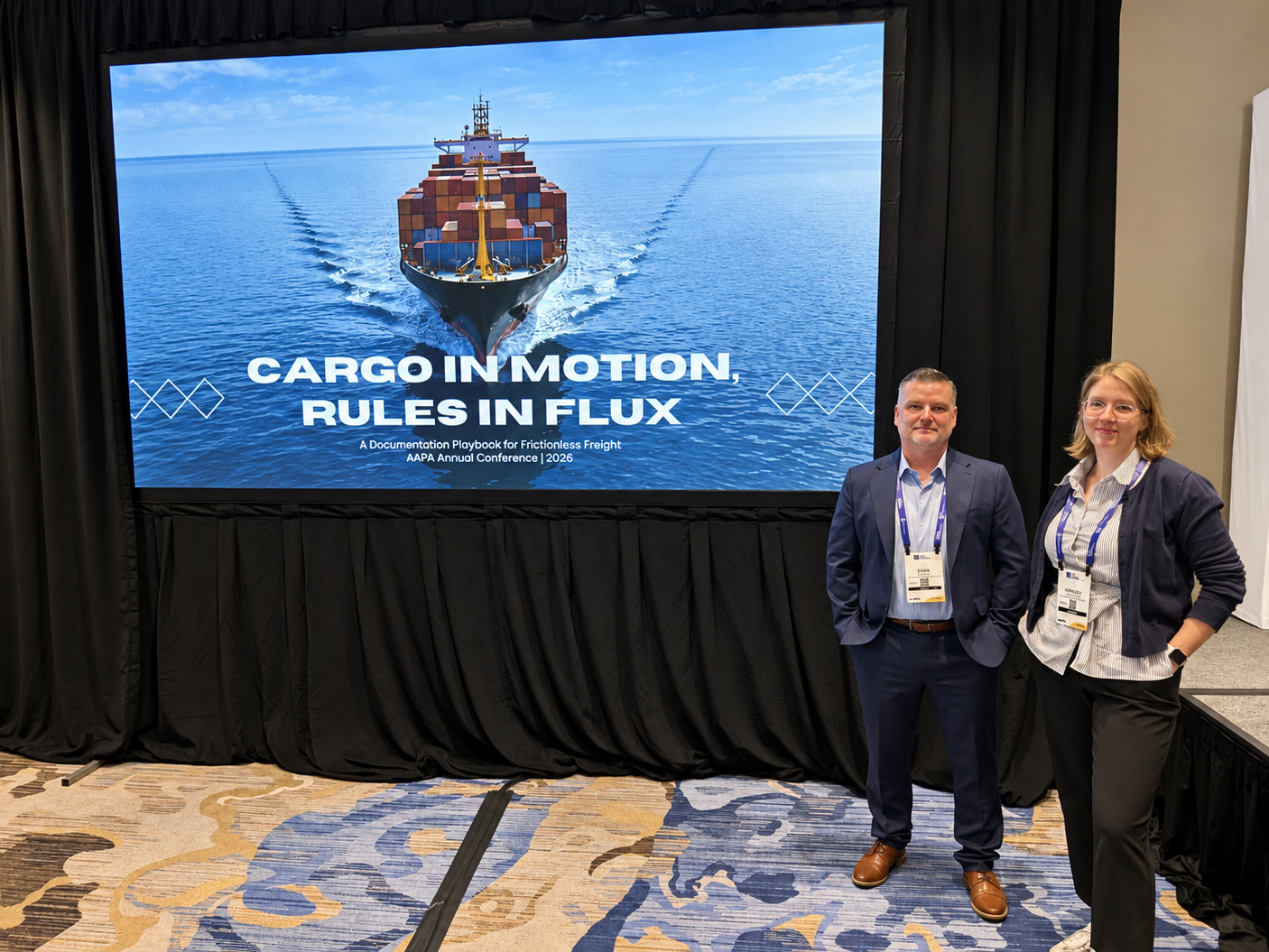
The AAPA Annual Convention took place September 28-30, 2026, in New Orleans, bringing together industry leaders, innovators and stakeholders from across the maritime, logistics and supply chain sectors to discuss the technological, regulatory and trade pressures reshaping the ports industry and supply chain ecosystem.
Evan Trapp, vice president of business development at Peacock Tariff Consulting, and Mikenna Richardson, international trade and tariff advisor at Peacock Tariff Consulting, co-presented the session “Cargo in Motion, Rules in Flux: A Documentation Playbook for Frictionless Freight,” covering what ports and terminal operators need to know to keep shipments moving at a time when trade rules shift so drastically.
Practical Playbook for Port Operators
Tariff rates and trade policies are evolving faster than cargo can move. As U.S. trade policy and tariff scopes have been modified, import bans issued and classifications revised, shipments still continue to move, creating a perfect storm of implications across the supply chain.
Evan and Mikenna gave convention attendees a practical playbook for how to reduce friction.
- Monitor policy and rule changes in real time: With tariff and trade policies changing so rapidly, ports and terminal operators need a system in place to gain better visibility of what’s coming and going and monitor updates in real time so they can adjust accordingly.
- Keep documentation practices current: Outdated documentation causes more than just compliance risk and could have substantial impacts on operations. Maintaining current documentation ensures operators stay ahead of discrepancies that could cause shipping disruptions.
- Coordinate to get updates to the terminal before the vessel arrives: Be proactive. Coordinate with shippers and terminal operators ahead of time to ensure that all updates are communicated ahead of arrival to avoid any surprises that could be costly.
Lessons Learned & What’s Next
A lesson learned from the session and the AAPA Convention as a whole: trade and tariff compliance is an operational concern, with potential impacts that radiate beyond ports and terminals. While on-site in New Orleans, Mikenna spoke with WDSU, the local NBC affiliate, about the broader implications of the recently announced U.S.-China trade deal cutting tariffs on various goods.
As trade policy and tariff rules continue to evolve, organizations in all sectors that stay ahead of changes will be best positioned to keep goods moving and ensure compliance.
To learn more and stay up to date on the latest in tariffs and trade, contact our team.