
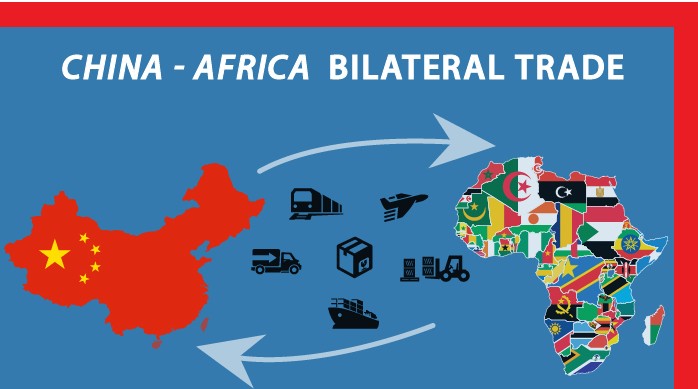
What Beijing’s new zero-tariff architecture means for trade, geopolitics, and the global pushback against protectionism. On May 1, 2026, China’s customs barriers fell for almost an entire continent. Imports from 53 of Africa’s 54 countries now enter the Chinese market at a zero tariff across 100 percent of tariff lines, an unusually broad preference that Beijing has framed as a two-year pact running through 2028. The lone exception is Eswatini, the small southern African kingdom that still recognizes Taiwan rather than the People’s Republic. The contrast between an open door for 53 countries and a closed one for the 54th is the entire story in miniature: this is a trade policy, but it is also a geopolitical instrument, and businesses on every continent should read it as both.
For companies that source, sell, or compete in African markets, the headline matters less than the architecture beneath it. Beijing has built a durable mechanism that advances three goals at once: it locks in long-term supply of food, fuel, and critical minerals; it embeds Chinese firms further into African value chains; and it positions China rhetorically as the antithesis of the tariff-heavy posture that Washington has adopted under the Trump administration. The result is a sharper, more consequential competition for the loyalty of the Global South than at any point in the post-Cold War era.
How the deal is structured
The zero-tariff scheme is the latest, and largest, piece of a multi-year program that Beijing has built through the Forum on China-Africa Cooperation, or FOCAC. At the September 2024 Beijing summit, President Xi Jinping pledged to eliminate tariffs on goods from the world’s least developed countries, a step that initially applied to 33 African nations. In June 2025, the Changsha Declaration extended the promise to all African countries with diplomatic ties to Beijing, and the China-Africa Economic Partnership for Shared Development was signed shortly after. Implementation followed in stages, culminating with the May 1, 2026 effective date for the remaining roughly 20 economies, which include all of Africa’s largest markets: South Africa, Egypt, Nigeria, Algeria, and Kenya among them.
What separates this round from previous Chinese trade preferences is the scope. Earlier schemes were limited to least-developed-country status, leaving middle-income exporters such as South Africa, Nigeria, and Egypt outside the tent. The new regime sweeps them in. China’s customs administration has also published an operational interpretation of the rules of origin governing the program, clarifying how exporters can document eligibility, what direct-shipment requirements apply, and how certificates of origin will be processed. The detail matters: a preference that nobody can administer is no preference at all, and the speed with which Beijing moved from political announcement to working customs procedure is itself a signal.
The two-year duration is worth noting. Officially the policy runs from May 2026 through 2028, when it will be reviewed. Chinese officials have publicly indicated extension is the expected outcome, and the political logic of FOCAC makes a quiet rollback unlikely. Still, the time-limited framing creates a useful pressure point for African governments and exporters to demonstrate that the arrangement is delivering, and a useful negotiating lever for Beijing if any of the 53 capitals drift on issues important to China.
The Eswatini exception
Eswatini, a country of roughly 1.2 million people, is the only African state that maintains formal diplomatic relations with Taipei. It is one of just twelve countries worldwide that does. Burkina Faso was the last African holdout to switch to Beijing, in 2018, leaving Eswatini alone on the continent. The exclusion of Eswatini from the zero-tariff regime is therefore not a quirk of trade policy. It is the policy’s central political feature, advertised rather than hidden, and it communicates to every other capital in Africa that diplomatic recognition is a prerequisite for market access.
The timing of the policy’s rollout has sharpened that message. Just one day after the zero-tariff regime took effect, Taiwanese President Lai Ching-te landed in Eswatini for a state visit, a trip that had been delayed earlier in the spring after Beijing reportedly pressured Seychelles, Mauritius, and Madagascar to deny overflight clearance for his chartered aircraft. Eswatini’s government has, so far, publicly rejected Beijing’s overtures and reaffirmed its ties with Taipei, citing the roughly 13,000 jobs that Taiwanese firms support in the kingdom. Still, the economic asymmetry is now visible to every Eswatini exporter who watches a South African or Mozambican neighbor enjoy duty-free entry into the world’s second-largest consumer market.
For business audiences this is more than diplomatic theater. Eswatini’s textile and sugar exporters now face a structural disadvantage relative to regional competitors. Capital that might have flowed into Eswatini-based assembly or agro-processing for re-export will reroute. The kingdom remains eligible, for now, for the African Growth and Opportunity Act in the United States and for European Union preferences, but those programs themselves are increasingly uncertain. The single-country exclusion is small in dollar terms and large in signaling power, and that combination is exactly what makes it effective statecraft.
What Africa gains
Africa is the world’s youngest and fastest-urbanizing region, but its share of global trade has been stuck near three percent for a generation. China-Africa two-way trade reached $295.6 billion in 2025, a record for the fourth consecutive year, with China remaining Africa’s largest trading partner for the sixteenth consecutive year. The composition of that trade, however, has long been the complaint: Africa exports ores, oil, and cocoa beans, and imports finished goods. The zero-tariff regime is unlikely to flip that pattern overnight, but early data suggest it is already nudging the mix.
In the first quarter of 2026, Chinese imports of African coffee jumped 70.4 percent and cocoa-bean imports rose 56.8 percent year-over-year. Imports from African least-developed countries climbed 15.2 percent in the twelve months through March 2026, reaching $21.4 billion. These are not transformative numbers in the macro sense, but they point in the right direction. With duties removed across all tariff lines, value-added categories such as packaged foods, leather goods, garments, processed minerals, and horticulture products gain a real chance to compete in Chinese supermarkets and e-commerce platforms, where price sensitivity is high and brand loyalty is still being built.
The bigger prize for African governments is investment, not exports. Tariff-free access into China shifts the math for any Chinese manufacturer weighing whether to build a final-assembly line on the continent. With AGOA’s future in Washington in doubt, and with the European Union’s Carbon Border Adjustment Mechanism set to tighten compliance costs on African exporters from 2026 onward, China’s offer looks like the cleanest preferential access available to the average African factory floor. South Africa’s Department of Trade has publicly framed the regime as a chance to push processed goods into China rather than raw materials, and Nigerian officials have done the same. Whether African producers can actually meet Chinese sanitary, phytosanitary, and quality standards at scale is the open question, and it is a hard one.
There are downside risks worth flagging. China still runs a trade surplus with the African continent, and removing tariffs in only one direction does not, by itself, narrow that gap. Cheap Chinese goods can crowd out nascent local manufacturers in Ghana, Ethiopia, or Tanzania, particularly in textiles and electronics. And preferential access to China can deepen export concentration among large extractive exporters, while smaller economies struggle to plug into the new framework.
What China gains
Beijing’s interests are easier to enumerate. First, supply security. China imports the bulk of the world’s cobalt and a rising share of its copper, lithium, and rare-earth precursors from African mines, and the zero-tariff regime locks those flows into a more durable preferential framework that complicates any Western effort to decouple Chinese refiners from African ore. Second, market positioning. Chinese automakers, solar manufacturers, and consumer-electronics brands have spent the last five years pushing aggressively into African retail, and the zero-tariff regime supports that push by encouraging African distributors to deepen Chinese vendor relationships. Third, soft power. Xi has framed the policy as a deliberate rebuke of “some countries” that have raised tariff walls, a reference unmistakably aimed at the United States.
There is a fourth and more strategic dimension that often gets less attention. Beijing is building a parallel trade architecture, and the China-Africa Economic Partnership for Shared Development sits alongside the Regional Comprehensive Economic Partnership in Asia and the upgraded China-ASEAN Free Trade Area as nodes in a network that excludes the United States by design. African capitals that join this network gain market access; they also become indirect participants in a Chinese-led trading system whose rules and dispute-resolution mechanisms are not those of the World Trade Organization or the Trans-Pacific Partnership. Over a decade, that drift toward a parallel order will matter more than any single tariff line.
Implications for the United States and Europe
Washington’s African trade posture is at its weakest point in a generation. AGOA, the bilateral preference program enacted in 2000, was reauthorized only through the end of 2026, and the broader Trump tariff regime has, by some independent estimates, gutted the duty-free promise that AGOA was supposed to deliver. African exporters who already faced country-specific reciprocal tariffs in 2025 are now watching a competitor offer the inverse: zero tariffs across all lines for two years, with extension expected. The political signaling alone has shifted. African trade ministers who used to lobby Capitol Hill on AGOA renewal now have a credible alternative to point to in talks with Beijing.
European exposure is different but real. The EU is Africa’s largest collective trading partner by some measures, and the Economic Partnership Agreements with African regional blocs already provide preferential access in both directions. The more pressing concern in Brussels is the Carbon Border Adjustment Mechanism, which phases in mandatory carbon-intensity reporting and tariff equivalents on cement, steel, aluminum, fertilizers, electricity, and hydrogen from 2026. African exporters, almost all of whom rely on grid electricity that is more carbon-intense than the European average, will pay more to enter Europe at exactly the moment China is letting them in for less. The strategic optics matter. So does the math.
Multinationals selling into Africa should expect competition to intensify. Chinese firms now have a tariff-supported runway into the continent’s middle class, and they are already the dominant suppliers in EV passenger cars, solar modules, and low-cost smartphones. Western brands relying on margin-rich premium segments will face sharper pressure, particularly as African distributors weigh the cost of dual sourcing. Companies that import from African suppliers, on the other hand, may want to revisit African origin in their own sourcing maps, both because tariff diversification is suddenly more valuable and because suppliers with Chinese market access are likely to attract investment that improves their reliability.
The fine print
Three caveats keep the zero-tariff regime from being a panacea. The first is rules of origin. China’s customs administration has clarified the framework, but the operational details remain demanding for many African exporters: certificates of origin must be issued by approved bodies, direct-shipment requirements limit transshipment options, and finished-goods producers will need to document local value content carefully. Exporters who relied on AGOA’s relatively loose third-country fabric rule will find Chinese requirements tighter.
The second caveat is capacity. The most binding constraint on African exports to China has rarely been tariffs. It has been infrastructure, energy reliability, logistics costs, and product standards. A fish exporter in Mozambique can ship duty-free to Shanghai today, but the cold-chain and phytosanitary requirements still apply, and the Mozambican electricity grid still goes down. Chinese concessional finance has been narrowing this gap for two decades, but the gap is wide and uneven. Countries with functional ports, working customs systems, and credible regulators will benefit disproportionately, and the others may watch the headline preference deliver less than the press release implies.
The third caveat is financial sustainability. Several African states are working through debt restructurings or are at high risk of distress, and the zero-tariff regime does not, on its own, address the foreign-currency squeeze that constrains their importers. African producers who want to use Chinese inputs to make finished goods for Chinese consumers still need dollars, yuan, or trade-finance lines that many local banks cannot supply at scale. Beijing’s broader push to settle Africa trade in renminbi will help on the margin, but it will not, by itself, dissolve the constraint.
What to watch
Three storylines will shape the next eighteen months. Watch the AGOA debate in Washington: any successor program will need to address the Chinese benchmark, and the political center of gravity has shifted. Watch the Eswatini question: a Taiwan-aligned holdout in southern Africa is sustainable while the kingdom can absorb the cost, but the cost is rising visibly, and Beijing is patient. And watch the early adopters: South Africa, Nigeria, Egypt, Kenya, and Morocco are the exporters most able to convert the preference into actual market share, and their performance through 2027 will determine whether the policy is renewed at the same scope, narrowed, or broadened.
For tariff-exposed importers, exporters, and supply-chain managers, the practical implication is straightforward. The map of preferential trade just changed. The world’s second-largest consumer market opened to almost an entire continent, while the world’s largest consumer market is moving in the opposite direction. Companies that build that asymmetry into their sourcing, pricing, and customer strategies will adapt faster than companies that don’t, and the decisions made in the next twelve months will compound for years.