
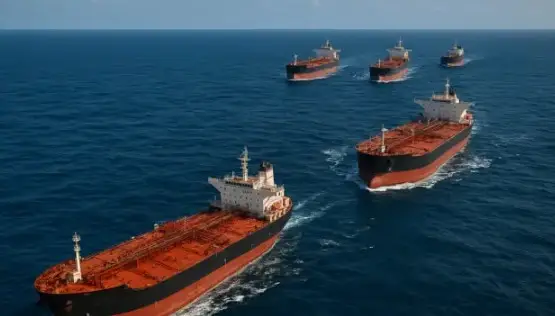
Global energy markets are entering uncharted waters literally. For the first time in modern history, more than 1.4 billion barrels of crude oil are floating at sea, trapped in tankers that cannot find buyers or ports willing to accept them. This phenomenon, often referred to as a “floating glut,” is not simply a logistical hiccup. It is the direct result of geopolitical tensions, sanctions regimes, and shifting trade flows that have disrupted the traditional pathways of oil commerce. The sheer scale of this accumulation highlights the fragility of global energy systems and underscores how politics can override market fundamentals.
The Scale of the Glut
- Vessel-tracking firms such as Vortexa and Kpler estimate that 1.4 billion barrels of oil are currently “on the water”, either en route to destinations or idling offshore without buyers. This figure represents the largest floating surplus in modern history and signals a fundamental imbalance between supply and demand.
- This glut is 24% higher than the seasonal average between 2016 and 2024, underscoring how extraordinary the current situation is compared to past cycles. The sheer volume of crude at sea suggests that global storage facilities are insufficient, forcing producers to rely on tankers as makeshift reservoirs.
- A significant portion between 20–40% comes from sanctioned producers like Russia, Iran, and Venezuela. These barrels are particularly difficult to place in the market, as buyers risk secondary sanctions or reputational damage, leaving them stranded longer than mainstream supplies.
Geopolitics and Sanctions
- Russia has been forced to rely on a “shadow fleet” of aging tankers after Western sanctions restricted its ability to export crude through conventional channels. Many of these vessels operate without insurance and often switch off transponders to avoid detection, creating opacity in global shipping routes.
- Iran has continued to export crude despite U.S. sanctions, often disguising shipments through blending or ship-to-ship transfers. China remains a key buyer, but volumes fluctuate as enforcement pressure increases, making Iranian flows unpredictable.
- Venezuela has managed modest production recovery, but its crude faces limited demand due to both sanctions and quality issues. Buyers often demand steep discounts, which further undermines Venezuela’s fiscal stability and complicates global pricing dynamics.
- Overall, the number of sanctioned barrels has risen 82% year-on-year, with most of the increase occurring in the past three months. This surge highlights how sanctions are directly contributing to the buildup of stranded oil at sea.
Shipping Strains and Tanker Economics
- Charter rates for Very Large Crude Carriers (VLCCs) have exceeded $100,000 per day, reflecting the strain on global shipping capacity. Tankers that would normally rotate quickly between ports are now stuck in limbo, driving up costs for operators and traders alike.
- Insurance premiums for shadow fleet vessels have skyrocketed, sometimes reaching levels ten times higher than those of mainstream carriers. This makes sanctioned crude even more expensive to move and increases the financial risks for companies willing to handle it.
- The aging fleet poses additional challenges, as many shadow fleet tankers are over 20 years old. Their deteriorating condition raises safety concerns, particularly when operating without proper oversight or maintenance.
- Congestion hotspots have emerged in critical maritime zones such as the South China Sea, Persian Gulf, Mediterranean Sea, and West African coast. These regions are now crowded with idling vessels, increasing the risk of accidents and bottlenecks in global trade.
Market Implications
- Oversupply risks are mounting, with the International Energy Agency (IEA) projecting global oil production to rise by 3 million barrels per day in 2025 and another 2.4 mb/d in 2026. This growth far outpaces demand, ensuring that the glut will persist.
- Demand slowdown is evident, as global oil consumption is expected to increase by only 710,000 barrels per day in 2026. Electrification, efficiency gains, and weaker macroeconomic conditions are all contributing to this muted growth.
- The structural imbalance between supply and demand means that by 2026, the market will face an excess of 3.3 million barrels per day. This oversupply cements the glut as a long-term challenge rather than a temporary disruption.
Price Impact
- Brent crude has remained relatively stable despite the glut, trading around $61.47 per barrel in December 2025. This resilience reflects market hesitation to fully account for stranded barrels, which may or may not reach buyers.
- The hidden storage effect of stranded oil complicates pricing. If these barrels remain stuck, they act as invisible reserves; if they eventually find buyers, they could flood the market and trigger a sharp price collapse.
- Fiscal strain is already visible, with Russia’s oil tax revenues falling 24% year-on-year. This decline marks the lowest inflows since 2020 and underscores how sanctions are eroding the financial foundations of major producers.
Regional Impacts
- Asia-Pacific is recalibrating imports, with China and India turning to Middle Eastern and Atlantic producers to replace sanctioned barrels. Southeast Asia faces congestion risks in key shipping lanes, raising concerns about maritime safety and trade reliability.
- Europe has largely cut itself off from Russian crude, increasing reliance on North Sea, U.S., and African supplies. However, shadow fleet operations continue to skirt EU regulations, raising energy security concerns and complicating enforcement.
- North America benefits from the glut, as U.S. shale producers gain market share. Canada faces pipeline capacity challenges but enjoys stable demand in Asia, positioning itself as a reliable supplier amid global volatility.
Environmental and Safety Risks
- The aging fleet of shadow tankers poses significant environmental risks, as many vessels are beyond their safe operating age. Mechanical failures or spills could have catastrophic consequences, particularly in congested waters.
- Congestion near coasts increases the likelihood of accidents, with idling tankers creating navigational hazards. Maritime authorities are struggling to monitor and regulate these vessels effectively.
- The carbon footprint of floating storage is substantial, as idling ships continue to burn fuel for power and maintenance. This adds emissions to an already strained climate system, compounding global environmental challenges.
Why the U.S. Captured the Tanker
- The tanker Skipper was seized off the coast of Venezuela in December 2025. U.S. officials said it was a stateless vessel that had been sanctioned since 2022 for involvement in illicit oil trading networks linked to Iran and Venezuela.
- The ship had previously operated under another name (Adisa) and was accused of supporting Iranian oil exports. It reportedly used spoofing techniques to falsify its location, broadcasting signals that suggested it was near Guyana while actually loading crude at Venezuela’s José terminal.
- U.S. Attorney General Pam Bondi stated that the seizure was executed under a federal warrant targeting vessels used to transport sanctioned oil. The operation involved the FBI, Homeland Security Investigations, the Coast Guard, and U.S. military forces.
- The seizure was intended to cut off revenue streams for Venezuelan President Nicolás Maduro’s government, which relies heavily on oil exports. Washington framed the move as part of a broader crackdown on shadow fleet tankers that smuggle oil for sanctioned regimes like Venezuela, Iran, and Russia.
- Venezuela condemned the action as “piracy” and “theft,” arguing that the U.S. was targeting its natural resources for geopolitical gain.
Will the U.S. Capture More Tankers?
- Multiple reports indicate that the U.S. is preparing to intercept additional ships transporting Venezuelan oil. Sources familiar with the matter said Washington has assembled a target list of several more sanctioned tankers for possible seizure.
- The Trump administration has made clear that it will not allow “sanctioned vessels to sail the seas with black-market oil,” suggesting that further interdictions are part of its sanctions enforcement strategy.
- Analysts note that Venezuela has fewer than 1 million barrels per day of exports, a small fraction of the global market. Even if more seizures occur, they are unlikely to cause a major price spike, but they could cripple Venezuela’s finances and deter shippers from handling its crude.
- Maritime intelligence experts warn that the U.S. crackdown could extend beyond Venezuela to other sanctioned exporters, including Iran and Russia, since all rely on the same shadow fleet of aging, stateless tankers.
- In short, the seizure of Skipper may mark the beginning of a broader U.S. campaign to disrupt shadow fleet operations, signaling that more tankers could be captured in the coming months.
International Reactions to the U.S. Seizure
- The U.S. seizure of the Venezuelan tanker Skipper marked the largest interdiction of a sanctioned vessel in years, and it has raised questions about whether other nations will adopt similar tactics.
- European Union members have generally preferred to enforce sanctions through financial and regulatory channels blocking insurance, restricting access to ports, and penalizing companies that facilitate shadow fleet operations. Direct military seizures are considered legally risky under international law, especially without UN Security Council authorization.
- United Kingdom and EU maritime regulators have already increased scrutiny of vessels suspected of “spoofing” their locations or flying false flags, but they have stopped short of boarding ships at sea.
Legal and Diplomatic Constraints
- Under the UN Convention on the Law of the Sea (UNCLOS), only the flag state has jurisdiction over a vessel in international waters, unless the ship is stateless or engaged in piracy. The U.S. justified its seizure by labeling the Skipper a “stateless vessel,” but many legal experts argue this sets a controversial precedent.
- Countries like China and India, which are major buyers of Venezuelan and Iranian crude, are unlikely to support such seizures. They view unilateral enforcement as a violation of sovereignty and international law.
- Even U.S. allies may hesitate to follow suit, fearing escalation with Venezuela, Iran, or Russia. Instead, they may prefer secondary sanctions or port bans as safer enforcement tools.
Likelihood of Future Seizures by Other Nations
- High probability of indirect enforcement: Allies such as the EU, UK, and Japan may expand restrictions on shadow fleet vessels by denying them insurance, docking rights, or access to financial services.
- Low probability of direct seizures: Few nations are willing to risk military confrontation or accusations of “piracy.” The U.S. has unique naval capacity and political willingness to carry out such operations, which most allies lack or avoid.
- Potential ripple effect: While other countries may not board tankers themselves, the U.S. action could deter shippers globally, making it harder for Venezuela, Iran, and Russia to find carriers willing to risk sanctions.
Conclusion
The U.S. seizure of the Skipper is a bold escalation in sanctions enforcement, but it is unlikely to be replicated widely. Most countries will enforce sanctions through regulatory and financial measures rather than military interdictions. However, the precedent set by Washington may indirectly pressure shippers, insurers, and ports worldwide to avoid sanctioned crude, tightening the noose on Venezuela and other sanctioned exporters without direct seizures.
The billion-barrel glut at sea is more than a temporary imbalance it is a symbol of fractured global trade in an era of sanctions and shifting alliances. With sanctioned barrels surging, mainstream producers expanding output, and demand growth slowing, the world is entering a period of chronic oversupply. The consequences will ripple across economies: sanctioned states face fiscal strain, shipping markets remain volatile, and importers must navigate new risks in energy security. Whether this crude eventually finds buyers or remains stranded, the glut underscores a fundamental truth: in today’s energy landscape, politics can outweigh market forces, and the ocean itself has become the world’s largest storage tank.