
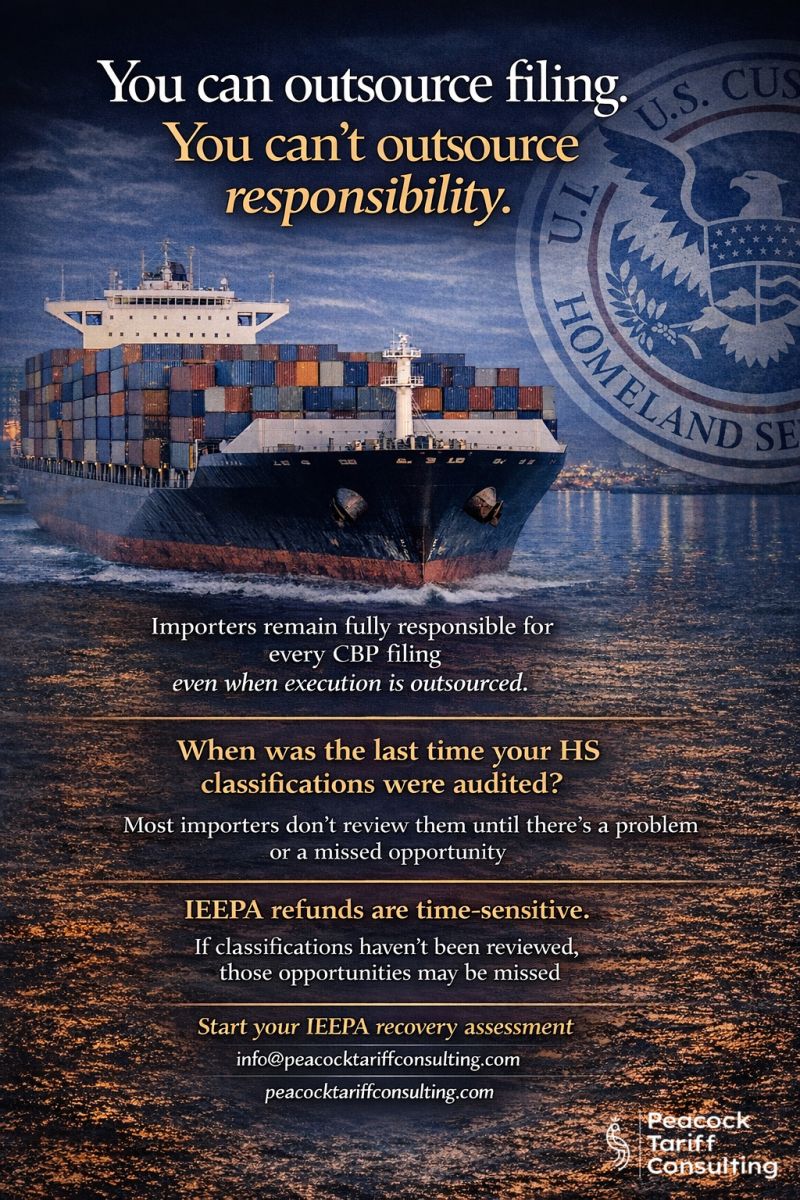
Introduction: Compliance Is Not the Same as Oversight
There is a persistent misconception in the U.S. importing community that having a customs broker handle entry filings is equivalent to having a compliance program. It is not. Most U.S. importers are not willfully non-compliant. They are, however, operating without meaningful oversight of the customs processes executed on their behalf.
The distinction matters enormously, particularly in the current trade environment. IEEPA-related duties have created time-sensitive recovery opportunities that require active monitoring and strategic action. Without independent oversight, these opportunities are routinely missed, and importers bear the consequences of decisions they never reviewed and deadlines they never tracked.
The Broker Dependency Problem
The standard operating model for most U.S. importers involves delegating entry filing and customs compliance to a licensed customs broker. This is entirely appropriate. Brokers provide essential operational capabilities, and the complexity of modern trade compliance makes professional assistance necessary for most importers.
The problem is not with the use of brokers. It is with the assumption that broker engagement equals comprehensive compliance management. In reality, brokers are primarily transactional service providers. They file entries based on the information provided to them, apply tariff classifications as they understand them, and process duties as assessed. What they typically do not do is independently validate the accuracy of every filing, monitor post-entry timelines for protest or refund opportunities, or develop and execute strategic compliance plans on the importer’s behalf.
This creates a governance gap. The importer retains full legal responsibility for every entry filed in their name, but in practice, no one is actively managing the quality, accuracy, and strategic implications of those filings.
Why the Gap Matters Now More Than Ever
In a stable trade environment, the oversight gap creates manageable risk. Tariff rates are predictable, classification decisions are routine, and the consequences of minor errors are typically limited to modest penalties or duty adjustments.
The current environment is anything but stable. IEEPA tariffs have introduced significant new duty obligations that are simultaneously being challenged in court. This creates a unique situation where importers may be paying duties that could be partially or fully recoverable, but only if the right administrative steps are taken within specific timeframes.
Protest deadlines are not flexible. The window for filing a protest against a customs decision is 180 days from the date of liquidation. Once that window closes, the opportunity is gone regardless of how favorable subsequent court rulings may be. Without active monitoring of liquidation dates and strategic assessment of protest opportunities, importers are leaving potential recovery on the table.
What Independent Oversight Looks Like
Independent customs governance is the layer that sits between the importer’s business operations and the broker’s transactional execution. It provides the strategic oversight, quality assurance, and proactive management that neither the importer’s internal team nor the broker is typically positioned to deliver.
In practice, this means independent review of entries and filings to catch errors before they become costly problems. It means systematic identification of refund and recovery opportunities, particularly those arising from the IEEPA tariff litigation. It means preparation and filing of protests within required deadlines, based on a clear understanding of both the legal landscape and the importer’s specific exposure. And it means ongoing governance over customs activity that ensures compliance is actively managed rather than passively assumed.
The Accountability Question
U.S. customs law is unambiguous on one point: the importer of record is responsible for the accuracy of every entry filed in their name. This responsibility cannot be delegated. When a broker makes an error in classification, valuation, or country of origin, it is the importer who faces the penalty, the duty assessment, or the lost recovery opportunity.
This legal reality makes independent oversight not just a best practice but a fundamental business necessity. Without it, importers are accepting accountability for processes they do not monitor, decisions they do not review, and outcomes they cannot influence.
Moving Beyond Assumed Compliance
The shift from assumed compliance to active governance does not require replacing existing broker relationships. It requires supplementing them with a layer of independent oversight that ensures every filing is accurate, every opportunity is identified, and every deadline is met.
In the current trade environment, with IEEPA duties creating both significant cost exposure and meaningful recovery potential, the cost of operating without this oversight is measurable and growing. Importers who continue to rely solely on broker execution without independent review are not just accepting risk. They are systematically missing opportunities that their competitors may be capturing.
Conclusion: Governance as Competitive Advantage
The importers who will navigate the current trade environment most successfully are not those with the best brokers. They are those who combine capable brokerage with independent oversight that actively manages compliance, identifies opportunities, and ensures nothing falls through the cracks. In a landscape defined by complexity, volatility, and time-sensitive recovery opportunities, customs governance is not overhead. It is competitive advantage.