
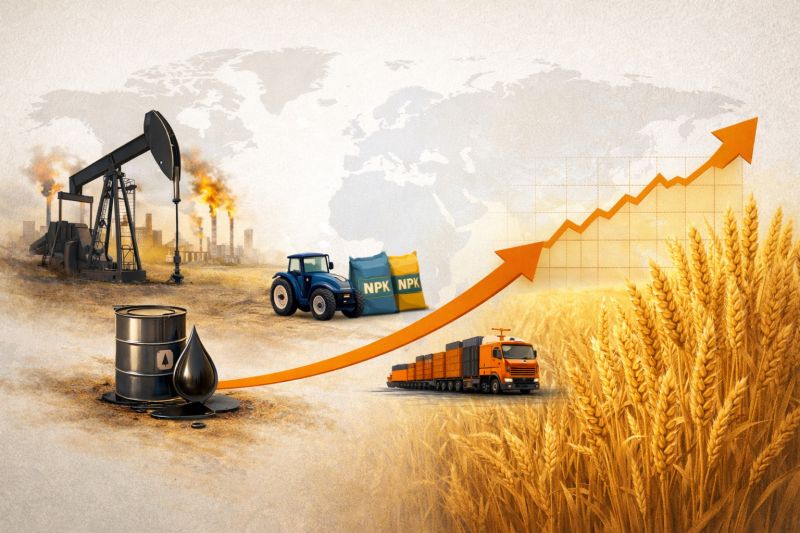
Energy Crisis Drives Agricultural Cost Inflation
Global wheat markets are experiencing significant upward pressure as energy disruptions in the Middle East cascade through agricultural supply chains. Wheat prices have approached two-year highs, driven by a complex interplay of energy costs that fundamentally reshape farming economics. The connection between energy markets and grain pricing is direct and immediate, affecting every stage of agricultural production from planting through transportation.
Middle East energy disruptions have created a shock that extends far beyond petroleum markets. When crude oil prices spike and energy availability becomes constrained, the ripple effects penetrate deeply into agricultural commodities. Farmers, grain handlers, and logistics providers operate in an energy-intensive ecosystem where fossil fuels are not peripheral costs but core operational requirements.
- Middle East energy disruptions pushing crude oil toward $90/barrel
- Agricultural production cycles heavily dependent on fossil fuel availability
- Energy costs directly passed through to farm gate prices
Diesel Costs and Equipment Farming Operations
Diesel fuel powers the modern grain farm. From soil preparation through harvest, mechanized agriculture depends on steady supplies of affordable diesel. When energy markets tighten, diesel prices follow crude oil upward, imposing immediate cost pressures on farming operations. A substantial portion of a grain farmer’s operating budget is allocated to fuel-for tractors, combines, irrigation pumps, and grain dryers.
The 2026 energy shock has pushed diesel costs to levels not seen in recent years. For wheat farmers, this translates directly into higher variable costs per acre. A farmer cultivating 2,000 acres of wheat faces substantial additional expenses when diesel moves from $2.50 to $3.50 per gallon. These cost increases cannot be immediately offset by higher wheat prices, creating margin compression during planting and growing seasons.
- Diesel-powered equipment represents 30-40% of variable farming costs
- Irrigation and grain drying operations particularly fuel-intensive
- Cost increases incurred before harvest creates cash flow pressure
- Farmers cannot immediately adjust acreage or crop selection
Fertilizer Pricing Under Energy Constraint
Fertilizer production is deeply energy-intensive, particularly nitrogen-based fertilizers that depend on natural gas feedstock. When energy markets experience disruptions, fertilizer producers face escalating production costs. Natural gas, a primary input for ammonia synthesis and nitrogen fertilizer manufacturing, trades with crude oil correlations. As crude oil approaches $90/barrel, natural gas prices have similarly increased.
The fertilizer industry operates on tight margins where feedstock costs comprise 40-50% of total production expenses. Rising natural gas prices force immediate increases in fertilizer pricing. Farmers purchasing nitrogen, phosphate, and potassium inputs face 15-25% cost increases compared to 2025 levels. These higher fertilizer costs directly impact crop yields and overall production economics.
- Natural gas prices up 35-40% year-over-year
- Ammonia synthesis and nitrogen production energy-dependent
- Fertilizer costs comprise 20-25% of wheat production budget
- Higher fertilizer costs reduce available nutrients for equivalent budgets
Transportation Cost Multiplier Effects
Bulk grain transportation relies entirely on fossil fuels. Whether grain moves by truck to elevators, by rail to ports, or by barge down rivers, every mode depends on diesel or fuel oil. Transportation costs for agricultural commodities are directly indexed to fuel prices. When energy markets tighten, transportation becomes more expensive, creating additional cost layers above farm gate prices.
The 2026 energy shock has increased grain transportation costs materially. A bushel of wheat that cost $0.15 to transport in 2025 now costs $0.25 to $0.30. For farmers shipping grain 200-300 miles to processing facilities or export terminals, these accumulated transportation costs reduce net farm revenue substantially. Regional wheat prices diverge based on proximity to transportation corridors, with remote areas experiencing larger transportation premiums.
- Truck transportation costs increased 40-50% year-over-year
- Rail and barge transportation similarly fuel-indexed
- Geographic price spreads widening due to transportation cost variation
- International grain trade margins compressed by higher shipping costs
Food Price Pressure Building Downstream
Wheat is a primary ingredient in bread, cereals, pasta, baked goods, and countless processed foods. When wheat prices increase, these costs propagate through food manufacturing and retail supply chains. Bakeries, cereal manufacturers, and food processors purchase wheat as a raw material and face higher input costs. These producers typically cannot absorb cost increases and must pass them through to consumers via higher retail prices.
The consumer impact of two-year wheat price highs is becoming evident. Bread and baked good prices have increased 8-12% in early 2026, reflecting both wheat cost inflation and energy-driven transportation costs. Food manufacturers are making difficult decisions about pricing versus margin compression, knowing that consumer price sensitivity is elevated during periods of economic uncertainty.
- Wheat comprises 10-15% of bread production costs
- Cereal manufacturers face 25-30% input cost increases
- Bakery goods experiencing double-digit retail price increases
- Consumer food inflation diverging from broader inflation measures
Market Outlook and Risk Considerations
The convergence of energy disruptions, transportation constraints, and fertilizer scarcity creates a sustained environment of elevated grain prices. Wheat prices approaching two-year highs reflect genuine supply-demand dynamics compounded by energy market volatility. Looking forward, the critical question is whether Middle East energy disruptions persist or resolve.
If energy disruptions remain contained to 2-3 months, agricultural markets may stabilize in the second quarter. However, prolonged energy constraints could maintain elevated wheat prices throughout 2026. Agricultural producers, food manufacturers, and retailers are all adjusting business plans based on higher commodity cost expectations. This adjustment process itself creates market volatility as actors across supply chains recalibrate operations, inventory policies, and pricing strategies.
- Energy market resolution critical for agricultural cost normalization
- Fertilizer supply constraints may persist independent of crude oil
- Food price inflation likely to remain elevated through Q2 2026
- Agricultural sector investment in efficiency becoming strategic priority