
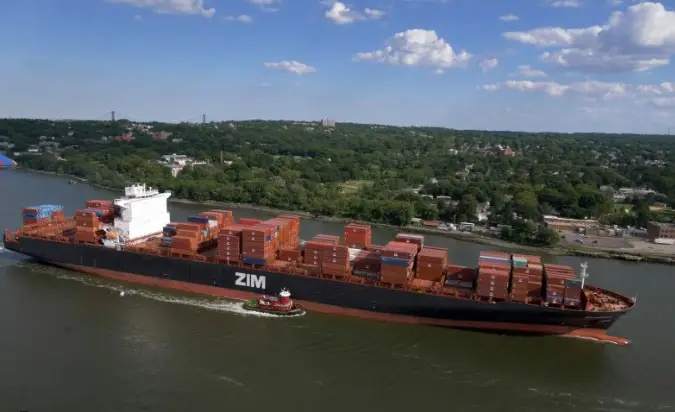
Zim Integrated Shipping Services, one of the world’s most strategically watched container carriers, is heading toward a proxy battle that could reshape its governance, ownership structure, and long‑term strategic direction. The confrontation follows the board’s rejection of a buyout proposal from its own CEO a rare and high‑stakes move in global shipping, where leadership transitions are typically quiet, negotiated, and shielded from public markets.
The situation aligns with a familiar pattern in corporate governance: a CEO attempts to take a company private during a cyclical downturn, the board rejects the offer as undervalued, and shareholders are thrust into a decision that could alter the company’s trajectory for a decade. But Zim’s case is far more complex. It sits at the intersection of volatile freight markets, geopolitical risk, fleet‑strategy bets, and the shifting balance of power between carriers and investors.
This analysis unpacks how the conflict emerged, why the board rejected the bid, who the potential buyers are, and what the proxy fight means for Zim, its shareholders, and the global shipping landscape.
Zim’s Post‑Pandemic Whiplash: From Record Profits to Strategic Vulnerability
Few carriers experienced the pandemic boom and the post‑boom collapse as dramatically as Zim.
During the boom (2020–2022):
- Freight rates on Asia–US and Asia–Europe lanes hit historic highs
- Zim posted some of the highest margins in the industry
- The company distributed billions in dividends
- Investors briefly viewed Zim as a “new‑model” carrier: asset‑light, digitally forward, agile
After the boom (2023–2024):
- Spot rates collapsed by more than 80%
- Zim’s charter‑heavy fleet strategy became a liability
- The company posted steep quarterly losses
- Its share price fell sharply
This volatility created the perfect environment for a CEO‑led buyout: public markets were punishing Zim for short‑term losses, while management believed the long‑term strategy was undervalued.
The CEO’s Buyout Bid: Strategic Logic and Motivations
CEO‑led buyouts in cyclical industries follow a familiar logic:
A. Belief that the company is undervalued
Management may believe:
- LNG‑powered fleet investments will pay off
- Geopolitical disruptions will keep rates elevated
- The company’s digital and inland‑logistics strategy will differentiate it
B. Desire for strategic freedom
Going private would allow Zim to:
- Rebalance its chartered vs. owned fleet
- Pursue riskier long‑term bets
- Absorb short‑term losses during restructuring
C. Control over capital allocation
Public markets often dislike:
- High leverage
- Counter‑cyclical investment
- Long‑term fleet commitments
A private Zim could invest aggressively during downturns.
D. Personal and leadership incentives
Boards scrutinize CEO buyouts intensely due to:
- Information asymmetry
- Timing
- Potential personal gain
Why the Board Rejected the Buyout: Fiduciary Duty Meets Strategic Disagreement
Boards reject CEO buyouts for three primary reasons.
A. The offer undervalued the company
The board likely believes:
- The downturn is temporary
- Red Sea disruptions will keep rates elevated
- The LNG fleet strategy will yield long‑term advantages
B. Conflict‑of‑interest concerns
A CEO trying to buy the company is inherently conflicted.
C. Pressure from institutional investors
Large shareholders may prefer to ride out the cycle rather than sell at a depressed valuation.
The Proxy Fight: How It Works and Why It’s So Rare in Shipping
A proxy fight occurs when a dissident shareholder likely aligned with the CEO attempts to replace board members by rallying other shareholders.
CEO’s camp will argue:
- The board is blocking value creation
- Management needs freedom to restructure
- The offer was fair
Board will argue:
- The offer was opportunistic
- The CEO is conflicted
- Zim’s long‑term value is higher
Why proxy fights are rare in shipping
Most carriers are:
- State‑linked
- Family‑controlled
- Privately held
Zim is one of the few global carriers where a proxy fight is even possible.
The Geopolitical Layer: Why This Fight Matters Beyond Corporate Governance
A. Red Sea crisis and Suez disruptions
Carriers rerouting around Africa have seen:
- Longer transit times
- Tightened capacity
- Higher rates
This strengthens the board’s belief that Zim’s valuation will rebound.
B. US–China trade tensions
Zim’s transpacific exposure makes it sensitive to:
- Sourcing shifts
- Tariff changes
- Trade‑lane volatility
C. Israel’s geopolitical environment
Zim’s identity as an Israeli carrier adds:
- National‑security considerations
- Political scrutiny
- Government interest in ownership
D. Environmental regulation and LNG strategy
Zim’s LNG bet positions it ahead of IMO 2030 and 2050 requirements.
What Happens Next: Three Scenarios
Scenario 1: CEO wins the proxy fight
- New board
- Renewed push to take Zim private
- Aggressive restructuring
Scenario 2: Board wins
- CEO may resign
- Conservative strategy
- Institutional investors gain influence
Scenario 3: Negotiated settlement
- Board expands
- Revised buyout terms
- Avoids full proxy war
Why This Story Matters for the Global Shipping Sector
Zim’s proxy fight reflects broader industry tensions:
- End of the super‑cycle
- Investor impatience
- Leadership transitions
- Geopolitical shocks
- Environmental regulation
Who the Buyers Might Be: MSC, Hapag‑Lloyd, and a Possible Return of the CEO’s Consortium
According to reporting from Calcalist/CTech, the sale process led by Evercore has already attracted bids from two of the world’s most powerful carriers, with a third domestic bid still possible. This buyer landscape adds a new layer of geopolitical and strategic complexity.
MSC: The World’s Largest Carrier and the Leading Contender
MSC has submitted a formal bid to acquire Zim.
Why MSC Wants Zim
- Strengthen Eastern Mediterranean presence
- Expand transpacific footprint
- Absorb Zim’s charter-heavy fleet more efficiently
Why MSC Is Controversial
Inside Israel, the Zim Workers’ Union opposes the sale, citing:
- National‑security risks
- Potential layoffs
- Loss of Israeli control
The government’s golden share could be used to block the sale.
Hapag‑Lloyd: The German Carrier With Gulf‑State Shareholders
Hapag‑Lloyd has also submitted a bid.
Why Hapag‑Lloyd Is a Serious Bidder
- Strong financial position
- Network overlap with Zim
- Continued service to Israeli ports during wartime
Geopolitical Sensitivities
Hapag‑Lloyd’s shareholders include:
- Qatar (12.3%)
- Saudi Arabia (10.2%)
This has triggered concerns inside Israel about Gulf‑state influence.
The CEO’s Consortium: Eli Glickman and Rami Ungar May Return
Before foreign carriers entered the race, CEO Eli Glickman and Israeli shipping magnate Rami Ungar submitted a buyout bid. The board rejected it as too low reportedly lower than Zim’s own cash holdings.
Why They May Return
- Domestic ownership avoids political backlash
- Labor unions prefer Israeli buyers
- Government resistance would diminish
Industry sources believe the consortium “has not said its final word.”
Domestic Shareholder Activism: A Fourth, Indirect “Buyer”
Israeli institutional investors including More Gemel, Reading Capital, and Sparta have nominated three new board candidates. Their goal is to influence the sale process and potentially steer the company toward an Israeli-led acquisition.
Government Intervention: The Wild Card
Israel’s Ministry of Transportation has already expressed sympathy for blocking a foreign sale. The government’s golden share gives it veto power over:
- Ownership changes
- Headquarters relocation
- Strategic decisions affecting national security
This makes the sale not just a corporate transaction, but a geopolitical decision.
The Bottom Line: A Proxy Fight That Will Shape Zim’s Future and Signal the Industry’s Direction
Zim’s proxy fight is a referendum on:
- How mid‑sized carriers should compete
- How much risk management should take
- Whether public markets can support long‑cycle strategies
- How geopolitics reshapes carrier strategy
- Whether LNG bets will pay off
The outcome will influence not only Zim’s future, but also how investors view the entire container‑shipping sector.
Conclusion: Why Control of Seafreight Is Becoming the New Pillar of National and Corporate Independence
Zim’s unfolding proxy fight is more than a corporate drama it is a preview of a future in which control over maritime logistics becomes a defining element of national resilience and corporate independence. The last five years have demonstrated, repeatedly and painfully, that global supply chains are no longer neutral infrastructure. They are strategic assets shaped by geopolitics, national interests, and the priorities of foreign carriers whose decisions may not align with the needs of the countries or companies that depend on them.
From the Red Sea crisis to US–China trade tensions, from sanctions regimes to chokepoint disruptions in the Suez and Panama Canals, the world has entered an era where shipping is once again a geopolitical instrument. In this environment, relying exclusively on foreign carriers no matter how efficient or well‑capitalized introduces vulnerabilities that governments and major shippers can no longer ignore.
For Israel, Zim has historically been more than a commercial enterprise; it has been a strategic lifeline. During wartime and regional instability, Zim continued calling Israeli ports when many foreign carriers paused or rerouted. That reliability is not an accident it is the product of national alignment, cultural proximity, and strategic commitment. As foreign giants like MSC and Hapag‑Lloyd circle the company, the debate over ownership is fundamentally a debate about who controls the arteries of national survival.
But the lesson extends far beyond Israel.
Countries and large shippers across the world are beginning to recognize that owning or controlling seafreight capacity is the next frontier of economic sovereignty. Whether through national carriers, long‑term charter programs, strategic alliances, or direct investment in maritime assets, the trend is unmistakable: independence in the 21st century will depend not only on energy security and digital infrastructure, but on the ability to move goods reliably in a world where shipping lanes are contested and global carriers are increasingly shaped by geopolitical pressures.
For mid‑sized economies, for exporters, and for companies whose supply chains cannot tolerate disruption, the question is no longer whether seafreight independence is desirable it is whether they can afford not to pursue it.
Zim’s battle for control is a microcosm of a larger global shift. The nations and companies that secure their own maritime capabilities will be the ones best positioned to navigate the uncertainty ahead. Those that rely solely on foreign carriers will find themselves exposed to decisions made in boardrooms and capitals far from their own interests.
In a world defined by volatility, control of seafreight is becoming the new foundation of strategic autonomy. The future will belong to those who understand that logistics is not just a cost center it is a form of power.