
Category: Tariff News & Policy Updates
-
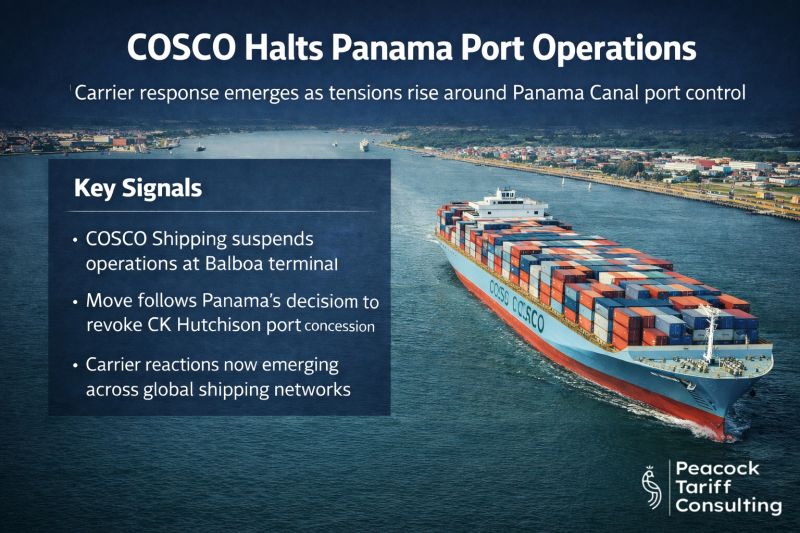
COSCO’s Operational Suspension: From Policy to Practice In a significant escalation of Panama Canal port disputes, Chinese state-backed shipping giant COSCO Shipping has suspended operations at the Balboa port terminal on the Pacific side of the Panama Canal. This move represents a critical transition point in the ongoing dispute over Panamanian port control, shifting the…
-
The CIT Ruling: A Fundamental Invalidation of IEEPA Tariff Authority The Court of International Trade’s decision striking down IEEPA tariffs represents a watershed moment in US trade policy and administrative law. The court concluded that the International Emergency Economic Powers Act does not grant the President authority to impose broad-based tariffs as a trade policy…
-
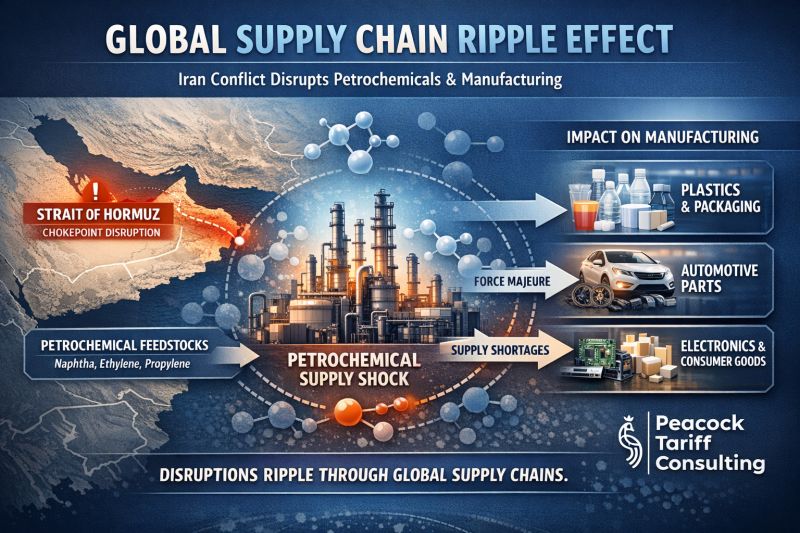
Indonesia’s Largest Petrochemical Producer Faces Critical Feedstock Constraint Chandra Asri Pacific, Indonesia’s largest petrochemical producer, has declared force majeure, effectively announcing that it cannot meet contractual obligations due to extraordinary circumstances beyond its control. The force majeure declaration reflects a critical constraint in its primary feedstock supply-naphtha-which flows through the Strait of Hormuz from Middle…
-
Australia’s Steel Ceiling Frames Case: A Symptom of Broader Protectionist Trend Australia’s recent anti-dumping determination on Chinese steel ceiling frames, imposing a 10% tariff, exemplifies a broader global trend toward anti-dumping actions and protective trade measures. The determination was based on findings that Chinese producers sold ceiling frames in the Australian market below their cost…
-
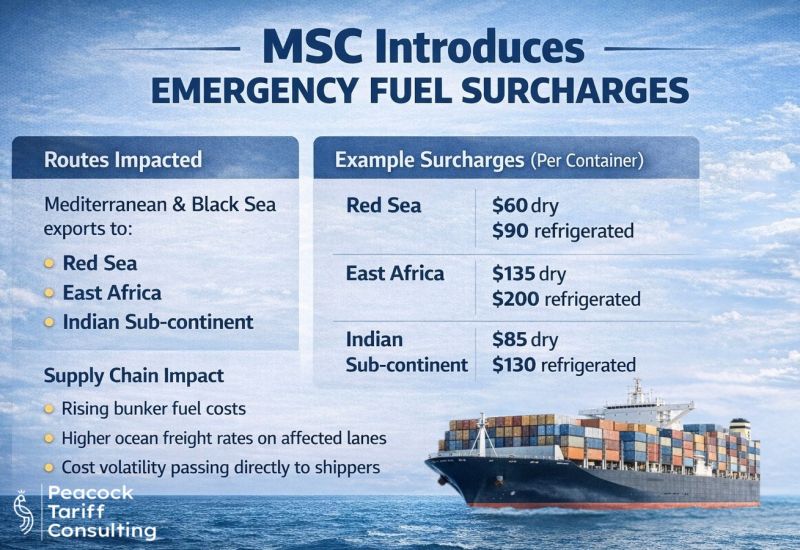
The Current Crisis: MSC’s Emergency Fuel Surcharge Announcement On March 16, 2026, Mediterranean Shipping Company (MSC), the world’s largest container carrier by fleet size, announced significant emergency fuel surcharges across multiple critical trade lanes. This decisive move reflects the cumulative impact of rising bunker fuel prices driven by ongoing geopolitical instability in the Middle East…
-
The International Payments Crisis Underlying Section 122 Tariffs The 10% import surcharge under Section 122 of the Trade Act of 1974 operates as a policy response to what the administration characterizes as fundamental international payments problems confronting the United States. The policy rationale is not protectionist in the conventional sense but rather balance-of-payments corrective-using tariff…
-
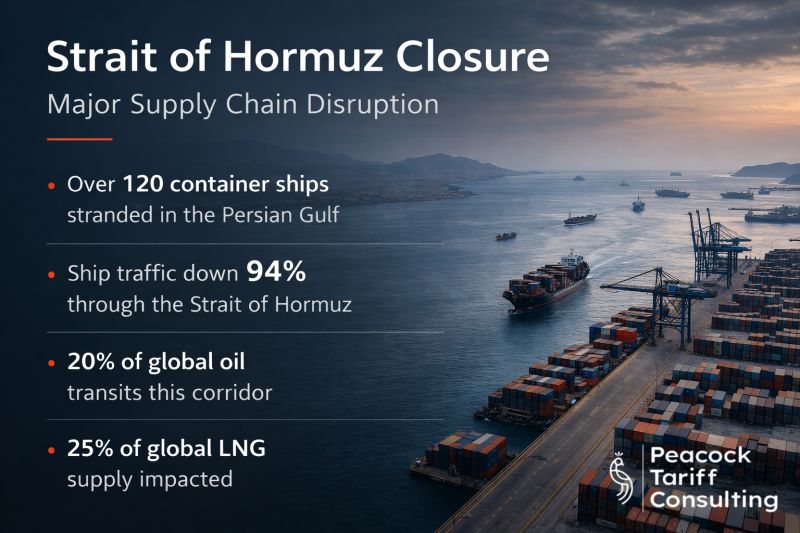
The Scale of the Strait of Hormuz Disruption The Strait of Hormuz, the critical chokepoint through which approximately 21% of global oil and 20% of global liquefied natural gas (LNG) flows, faces extraordinary disruption that has paralyzed normal shipping operations. Over two million twenty-foot equivalent units of containerized cargo are currently trapped in the region,…
-
Executive Overview: The Data-Driven Enforcement Shift The US Customs and Border Protection agency’s enforcement activity in 2025 demonstrated a measurable shift toward analytics-driven targeting and fact-intensive verification. CBP issued increasing volumes of CF-28 forms (Customs Form 28, used for fact-finding requests seeking additional information about shipments) and CF-29 forms (Customs Form 29, used for claim…
-
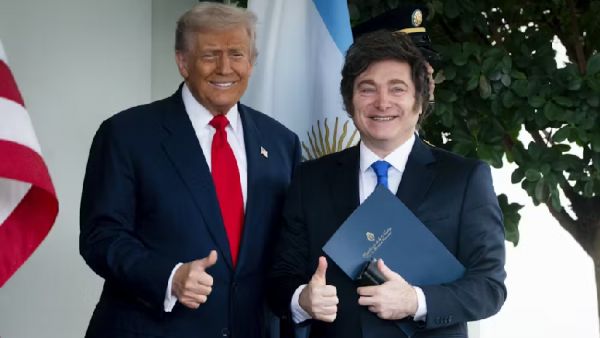
A Structural Reset in Beef Tariff Policy The United States has finalized a comprehensive trade agreement with Argentina that represents a structural reset in how U.S. tariff policy manages beef supply and pricing. The agreement scraps hundreds of tariffs historically applied to Argentine beef products while simultaneously expanding Argentina’s preferential quota for beef exports to…
-
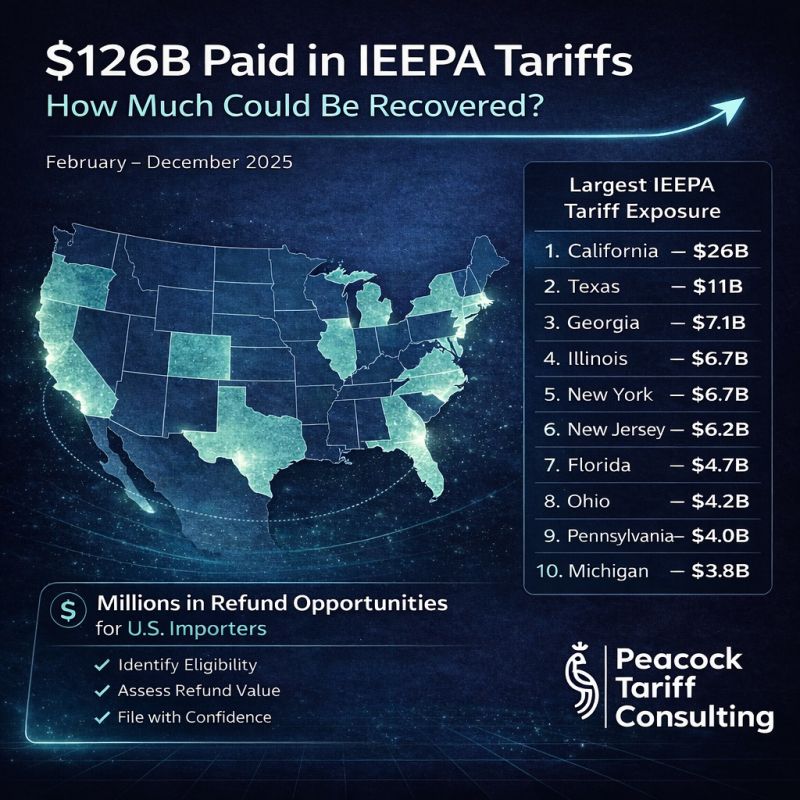
The February 27 Hard Deadline: When the Court Demands Government Action The United States Court of International Trade has established February 27 as a firm deadline for the Department of Justice to take a definitive position on the International Emergency Economic Powers Act (IEEPA) refund litigation. This deadline is not a suggestion or advisory; it…