
Tag: Section 321 de minimis
-
The Ecommerce Import Boom and Its Compliance Gap Ecommerce importers are subject to the same customs laws as any other importer, but many are unaware of these obligations. CBP has identified ecommerce imports as a priority enforcement area. Customs Compliance Basics You need an importer of record number. Every product must be classified under the…
-
Origin Matters More Than You Think Country of origin affects duty rates, eligibility for preferential treatment, applicability of trade remedy duties, admissibility under import restrictions, and marking requirements. Getting origin wrong can raise suspicions of transshipment or evasion. Two Origin Frameworks Non-preferential origin uses the substantial transformation test. Preferential origin uses agreement-specific rules. A single…
-
EU Digital Markets Act & Digital Services Act: Trade & Compliance Implications Quick Answer The EU Digital Markets Act (DMA) targets anti-competitive practices by large digital platforms, while the Digital Services Act (DSA) establishes content moderation and transparency obligations. Both regulations significantly impact non-EU businesses selling goods in the EU, affecting product liability, customs procedures…
-
USMCA de minimis exception allowing up to 10% non-originating materials in some configurations. When it applies, when it does not, calculation rules.
-
USMCA / CUSMA rules of origin for electronics. RVC, tariff-shift, sector-specific provisions, qualification documentation.
-
USMCA / CUSMA rules of origin for machinery. RVC, tariff-shift, sector-specific provisions, qualification documentation.
-
USMCA / CUSMA rules of origin for textiles and apparel. RVC, tariff-shift, sector-specific provisions, qualification documentation.
-
FTZ activation for e-commerce. Amazon FBA, Shopify, DTC brand applications. Section 321 changes, post-de-minimis economics.
-
Understanding De Minimis and Its Suspension De minimis treatment is a CBP procedure that waives duty collection on shipments below a specified value threshold, historically $800 for most shipments and higher thresholds for goods from designated developing countries. The de minimis exemption recognizes that collection costs for duties on low-value shipments may exceed the duty…
-
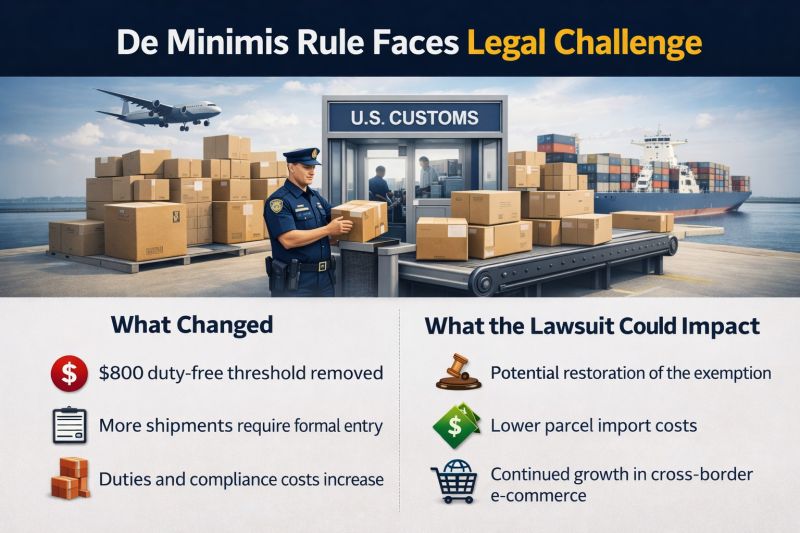
The De Minimis Rule: What It Was and Why It Mattered For decades, U.S. customs law included a de minimis import exemption that allowed goods with a total declared value of less than $800 to enter the United States duty-free and with minimal customs processing requirements. This seemingly technical trade policy created the foundation for…